I have this as well. Found out I had a stomach ulcer from H. Pylori one day and the next day I found out I had Lyme. Are the 2 linked?
I keep wondering if HP is giving me a false positive Lyme test. I don't feel as bad as most Lyme sufferers.
Posted by Abxnomore (Member # 18936) on :
Lyme puts you at risk to acquire many things.
If you have low stomach acid, it gives H. Pylori and many pathogens a chance to settle in. Our stomach acid is supposed to kick these critters out of our systems.
H. Pylori can be very resistant to treat but it's hardly a new idea. Many people who have lyme have H. pylori as well.
Posted by Amy C (Member # 19297) on :
That is very interesting!! My son had an ulcer when he was 12. Now my other son is 10 and having a lot of stomach problems that might be an ulcer.
Posted by treepatrol (Member # 4117) on :
http://www.sciencedaily.com/releases/2007/05/070522091147.htm JR check out the salt connection makes H pylori Salt Increases Ulcer-bug Virulence ScienceDaily (May 24, 2007) -- Scientists have identified yet another risk from a high-salt diet. High concentrations of salt in the stomach appear to induce gene activity in the ulcer-causing bacterium Helicobacter pylori, making it more virulent and increasing the likelihood of an infected person developing a severe gastric disease so much for salt? C
Posted by JRWagner (Member # 3229) on :
Abx...of course it is not a new idea, but the MECHANISM is. Look deeper...BB might also use similar mechanisms to burrow deeper into our soft tissues and CNS.
Stomach acid does NOT kill H-Pylori...if it did, there would be no problems with ulcers.
Thanks Tree...interesting! Another reason not to add salt to the diet, or to eat salty foods!!!!
TxLymie...interesting question...!
Tree, how are you feeling?
Peace, Love and Wellness, JRW
Posted by lou (Member # 81) on :
H. pylori is not a spirochete. See classification details on this website, right side of the page:
But wouldn't it be nice if borrelia had the same level of research done on it, to find out all the pathology associated?
Posted by aiden424 (Member # 7633) on :
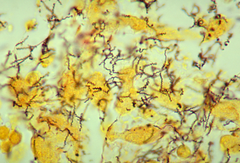
They do look kind of like a spirochete.
Kathy
Posted by JRWagner (Member # 3229) on :
Sorry Lou...it IS a spiro:
A spirochete is any of many motile, gram-negative bacteria in the order Spirochaetales. They are characterized by having a flexible spiral shape; these bacteria are some of the easiest to recognize. They move with a twisting motion with the aid of their axial filaments, which are specialized internal flagella (a spirochete may have up to 200 of these filaments). Their cells can be from 5 to 500 micrometers long, which is gigantic in the germ world.
Most spirochetes are found in liquid environments such as mud, water, and body fluids. They reproduce via binary fission and are heterotrophic (they eat other matter or organisms); most species are either decomposers (saprophytes) or pathogens (parasites).
Many spirochete species cause human diseases:
Anaerobiospirillum spp.: diarrhea, vaginosis Borrelia burgdorferi: Lyme disease Borrelia hermsii: Borreliosis, tick-borne relapsing fever Helicobacter pylori: stomach ulcers Leptospira spp.: leptospirosis Treponema pallidum: syphilis Treponema pertenue: yaws, frambesia Treponema carateum: pinta (a psoriasis-like skin infection) Treponema vincenti: Vincent's angina, acute necrotizing gingivitis and stomatitis, trench mouth There are many, many spirochetes which cause disease in animals; spirochetal infections can cause diarrhea and systemic infections in a wide range of domestic animals. Some of these illnesses can be very damaging to livestock and some can be transmitted to humans.
Some spirochetes will change their surface proteins to foil a person's or animal's immune system; thus, spirochetal diseases are very hard for one's body to fight off without the aid of antibiotics such as penicillin and clindamycin.
Posted by AliG (Member # 9734) on :
I just love a good debate!
Sorry JR- It would seem that Lou's got you on a technicality.
quote:Originally posted by JRWagner: A spirochete is any of many motile, gram-negative bacteria in the order Spirochaetales.
H.Pylori is not "in the order Spirochaetales", it's in the order "Campylobacterales". I think the differentiation has to do with the way they move.
I haven't read the article yet, so I don't know whether the info pertains to the structure of the organism or it's motility.
quote:Spirochaetes are distinguished from other bacterial phyla by the location of their flagella, sometimes called axial filaments, which run lengthwise between the cell membrane and outer membrane. These cause a twisting motion which allows the spirochaete to move about.
I'm going to go try to read the article now.
Thanks for sharing this, it looks very interesting by it's title.
Ali
[ 08-22-2009, 02:16 AM: Message edited by: AliG ]
Posted by AliG (Member # 9734) on :
OK, I've read it.
I find this very interesting:
quote:"This study indicates that the H. pylori, which is shaped very much like a screw, does not bore its way through the mucus gel like a screw through a cork as has previously been suggested," said Bansil. "Instead it achieves motility by using a clever biochemical strategy."
I wonder if Borrelia, being such an advanced organism, might employ similar strategies. I sincerely doubt anyone's ever done such a study.
As a matter of fact, I believe that NYU was planning to conduct a study of this nature.
I understood that it would be similar to the study done which showed how malaria organisms actually searched blindly to find a blood vessel, once injected by a mosquito. They were then able to make their way into the bloodstream & travel around inside the host.
They illustrated the entire infectious process at one of the www.LymeNYC.org support group meetings. It was quite interesting.
I did a quick search to find the name of the Dr. conducting the study & found this:
Immediate postdoctoral position available to work on imaging Lyme neuroborreliosis.
Lyme neuroborreliosis, caused by the spirochete Borrelia burgdorferi, is characterized by widespread dysfunction of the central nervous system.
While much is known about the role of ticks in the transmission of B. burgdorferi, the biology of this pathogenic agent in various mammalian hosts, and the multi-organ involvement of the disease caused by this spirochete, little information is available on the dynamics of Borrelia interaction with the brain and the pathogenesis of neuroborreliosis.
The available project will focus on the interaction of Borrelia as well as cells of the innate immune system with the cerebral microvasculature.
Techniques such as Borrelia cultivation, infection of small animals, intravital microscopy and live cell imaging, tissue preservation and immunolabeling, confocal and electron microscopy will be involved.
Interested applicants with a strong background in borreliosis, neuroscience, immunobiology of the brain, intravital imaging, cell biology, or infectious diseases please send a curriculum vitae including a short description of research interests, training and experience, and three references by email to:
Ute Frevert, DVM, PhD Department of Medical Parasitology NYU School of Medicine 341 E 25 St New York, NY 10010 Tel 212-263-6755
![[Big Grin]](biggrin.gif)
![[Wink]](wink.gif)

![[Smile]](smile.gif)
![[hi]](graemlins/hi.gif)