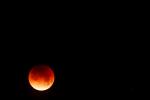
I will be the one with the lawn chair parked in the snow drift holding binoculars.
Should be a great sight if the sky is clear.
Posted by MADDOG (Member # 18) on :
WOW I want to watch out for that one,I may be in a snow drift also . MADDOG
Posted by aklnwlf (Member # 5960) on :
Hoping to make it to the science center to use their telescopes!
Posted by Lymetoo (Member # 743) on :
Cool.
Posted by hiker53 (Member # 6046) on :
Maddog. This is called a wolf moon. I expect to hear you howling! Posted by steve1906 (Member # 16206) on :
How to Shoot the Super Blood Wolf Moon Lunar Eclipse!
Sunday’s triple treat—a total lunar eclipse, a Blood Moon, and a Supermoon—will be a sight to see and remember. Many people will want to take a picture of this rare celestial event.
Here are some tips: • Location. Location. Location. Seeing the Supermoon near the horizon with trees, buildings, or landmarks will make the moon appear larger in your photos, even though it isn’t.
• Get creative. Ask a spouse, friend or your child to stand still for a few minutes. Position your camera so it looks like they are holding the moon.
• Use a tripod. This will stabilize your smart phone or camera. You want your smart phone or camera rock steady.
• If you are using your smart phone, use your optical lens only. Turn off the flash. Tap the screen. Hold your finger on the moon to lock focus.
Use your fingers to adjust the light balance. This will help you capture the lunar detail. Don’t zoom in. Take the photo and edit later if necessary.
• If you are using a DSLR camera, use a long lens of at least 300MM. Here are my recommended camera settings: start with your ISO at 100, shutter speed at 1/60, and your aperture at F8.
You can adjust your aperture or shutter from this setting. Try to focus on the edge of the moon for a crisp, sharp picture with lots of detail.
As the eclipse gets darker, you will have to adjust accordingly. When it gets near total lunar eclipse stage, you’ll need to change your settings.
If your shutter is too slow, the moon will take on an oval shape so you will need to increase your shutter speed above 1/60.
![[Big Grin]](biggrin.gif)