It seems that people making blood-smears at Frylabs may get the result, "coccobacilli adherent to erythrocytes... suggestive of Hemobartonella or Mycoplasma spp"
I have tried very hard to find out what this means.I think the following sums up what can be said about it.
1.It is very unlikely a known Bartonella sp.However there might be serological cross-reactions to Bartonella antibody tests. 2.Some people with Hemobartonella findings in blood-smear seem to have a positive PCR for mycoplasma ?- suggesting that hemobartonella is a kind of Mycoplasma.Is it the same as the bacteria which infects cats and dogs?If so, this is a "new human disease"- and we need to pool knowledge about symptoms and treatment.
If you have had treatment for this bug please write about experience with treatment. (For cats the vets prescribe Doxy and Prednisone!) Also , it would be interesting to see if there is a specific pattern regarding symptoms.
Looking forward to a lot of postings Gale
[ 01. July 2008, 08:18 AM: Message edited by: galehane ]
Posted by northstar (Member # 7911) on :
I did a search at the tope of the page for hemobartonella, and there are a few topics. Here is one:
a pubmed or google search may bring up more information for treatments, species, etc.
Northstar
Posted by Gabrielle (Member # 5329) on :
Maybe I'm wrong but I have the feeling that some weeks before the Fry tests came back saying only "Bartonella". Now, suddenly, there are more and more test results saying "Hemobartonella".
Is it possible that Fry's changed their opinion about what they find? Are they sure at all what they see?
Gale, I saw your pic and I don't see a difference between your Hemobartonella and my Bartonella.
Did some people in the past also got the diagnosis "Hemobartonella"?
Gabrielle
Posted by northstar (Member # 7911) on :
When these reports of results first showed up on this board, they said suggestive of
bartonella species or mycoplasma.
A few months down the road, it was bartonella species.
Now, it is suggestive hemobartonella (a no mention of bartonella.
Perhaps they are adjusting stains or resolutions.
Or, it may be what they are seeing in this group is different. That would make it just sampling variation.
I remember reading hemobartonella is not intracellular, while bart is. (and of course, that may only reflect the current state of knowledge).
Yet both adhere to the cell wall (those little black dots on the outside of RBC's in the photo).
It would seem that one could call and ask the lab how it is differentiated.
Northstar
Posted by galehane (Member # 15437) on :
Thanks for the answers so far. I think it is essential that everybody with a positive finding for hemabartonella contributes to pooling information.I dont think they are certain at Frylabs.Can it be found in healthy individuals also? Personally I dont think it is Bartonella .I had high and rising titers for bartonella Q and H (what are the chances of both at the same time?) in connection with a rash ,fever etc- but the reference laboratory in Marseille found the same samples negative. Also I have had negative PCRs for blood as well as skin-biopsies .Bartonella ABX also had no effect (Rif and Doxy)
So please 1.what are your major problems? neurological? muscles? joints ? fever ? skin? gastroentestinal, lungs etc etc 2.elevated CRP , red blood cells etc etc? 3. Treatment attempts. What worked - if anything?
Still hoping for more reactions Gale
Posted by hshbmom (Member # 9478) on :
I called Fry Labs recently and was told that they've been doing additional DNA tests on those whose blood test results indicate Hemobartonella OR Mycoplasma.
The representative said each time the DNA test was done, the results were positive for Mycoplasma.
The representative stated Hemobartonella bacteria IS NOT Bartonella. These are two different species of bacteria.
The representative stated they don't mean "hemo"-Bartonella....indicating an infection of the blood with Bartonella, when they write "Hemobartonella" in the test results.
If you have questions, call the lab.
Posted by galehane (Member # 15437) on :
Haemobartonella is a Mycoplasma,right.?? Only few infections of humans have been reported yet.So plaese- if you have experience post it here.
Gale
[ 01. July 2008, 08:42 AM: Message edited by: galehane ]
Posted by feelfit (Member # 12770) on :
My Fry results said "sugestive of hemobartonella". When I called Fry to clarify, they stated that it meant "bartonella of the blood"
Not mycoplasma. Someone needs to get their information to be consistent. Three hundred dollars for a test that is ambigious is not good!
Anyways, my Hemobartonella symptoms are: lightheadedness, head pressure, killer headaches, numbness and pricklies of the face and sometimes limbs, vision problems, anxiety...
Probably more but that is all that I can remember now.
Hope that this helps, Feelfit
Posted by Gabrielle (Member # 5329) on :
What is the update on this very confusing information? What I gathered from the article Haemobartonella was thought to be rickettsial disease when actually now because of new genome information it is considered part of the mycoplasma family.
So it was never bartonella to begin with? What do the LLMD's say when you hand them this test? According to the article you need to treat this with tetracycline since it has no cell wall. Penicillin or other antibacterials do not work.
In a way its great they they have decided to do more DNA testing based on what they find in the samples. But then what? Mycoplasma tests?
I wonder why they cant direct you after the findings. Anyone a patient of Dr. Fry with this test finding?
PS. I have not had any tests from fry but would like to, this is puzzling for sure.
Posted by galehane (Member # 15437) on :
Thank you for the contributions.
Personally I think it is fair to state that hemobartonella might be a mycoplasma-thing.Asking in the lab for treatment does not help- I tried.But if one could get in contact with Dr F. himself...?
So I think we have to face the fact that we are on our own.
Most important is to find out if anything helps. Cats are given doxy . For me it resulted in terrible pain which I dont think was a Herx.The only vaguely helpful therapy has been Azithromycin?
Gale
[ 01. July 2008, 08:42 AM: Message edited by: galehane ]
Posted by Gabrielle (Member # 5329) on :
What if these Hemobartonella/Hemoplasma are the �Bartonella-like Organisms (BLO)`` that Dr. B. is talking about?
What if the symptoms that we attribute to Bartonella (which should be then B. henselae) are also (or instead) the symptoms of Hemobartonella/Hemoplasma?
Could it be that Fry Labs changed their minds about what they see and could that mean that those of us who got the Fry diagnosis of ``Bartonella'' some months ago would now get the diagnosis of ``Hemobartonella'' if they would be tested again?
Is there anybody who is going to see doc F. soon and could ask about this? At least we should know what we are trying to kill so that we can choose the right bullet.
Gabrielle
Posted by galehane (Member # 15437) on :
[ 23. June 2008, 02:39 AM: Message edited by: galehane ]
Posted by merrygirl (Member # 12041) on :
In my vet tech experience,
cats who have Hemobartonella get treated with Zithromax for 30 days (at least)
Posted by galehane (Member # 15437) on :
P.S.
1.A further reason for me not to believe in bartonella was that my titers went from 64 to 1024(bart H) and 2048(quintana) and still low grade fever only.You don`t have trench fever (quintana) without fever.
2. anybody else who had positive effects from Azithromycin?
Gale
Posted by galehane (Member # 15437) on :
Dear Tosho No idea about I.V.
Of course I am not in a position to decide what people want to discuss here.
However, I think that mixing up bartonella infections with HEmobartonella/Mycoplasma spp is probably not productive- and is only going to confuse things. I realise that if you have been fighting Bartonella for a long time, it is difficult to accept that you really should have been fighting another thing- (my story). Bartonella belongs elsewhere, I think.
Interesting though with Erythr. Should work on mycoplasma.
Gale Gale
[ 01. July 2008, 08:44 AM: Message edited by: galehane ]
Posted by TerryK (Member # 8552) on :
Can't find the full article but I'll look some more.
J Infect Dis. 1992 May;165(5):976-7.
Haemobartonella-like microorganism infection in AIDS patients: ultrastructural pathology.
PMID: 1569354 [PubMed - indexed for MEDLINE]
Posted by TerryK (Member # 8552) on :
1: Nat New Biol. 1972 Apr 5;236(66):145-6.Links
Systemic lupus erythematosus associated with haemobartonella-like organisms.
Kallick CA, Levin S, Reddi KT, Landau WL.
PMID: 4112548 [PubMed - indexed for MEDLINE]
Posted by galehane (Member # 15437) on :
There must be more people with this hemobartonella finding in Frylab. Anyway I suggest that the ones interested try to get an antibody test and even better a PCR for Mycoplasma and report the result here. That might bring us a step forwards.
Gale
Posted by swedish lyme sufferer (Member # 14579) on :
If Hemobartonella is indead a mycoplasma species that can explain why some improve dramatically on clindamycin which attacks myco. Read some posts from Mathias who says he has mycoplasma and improved by clindamycin longterm. Also Dr J in SC claims clindamycin to be no 1 for treatment of neuroborreliosis, so who knows.....
BLO MIGHT be mycoplasma, mycoplasmas do respond to fluroquinolones too.
Posted by Gabrielle (Member # 5329) on :
If Mycoplasma responds to Clindamycin then I definitely don't have Mycoplasma. My former doc was a fan of Clindy and I had LOTS of it with absolutely zero response.
What helps me a bit are Tetracyclines and Macrolides. All the rest doesn't seem to do anything.
Gabrielle
Posted by Gabrielle (Member # 5329) on :
Thank you, Tosho,
as far as I know Clindamycin also works against intracellular bugs - just not against mine
Gabrielle
Posted by Casey Burns (Member # 14611) on :
I just found out that my Fry Labs test came up positive for MHB (Mycoplasma haemobartonella). Dr. M said that little is known about it currently. I'll find out more when I see her on July 1st.
Posted by galehane (Member # 15437) on :
hi welcome to the club. would it be an idea to ask for a PCR for Mycoplasma? Also.What are your symptoms and did you have success with any kind of antibiotic treatment?
Gale
Posted by CraigC (Member # 13732) on :
I have a question regarding the Fry results....I plan on seeing my local NP tomorrow, since it is her office that received the test results. From what I was told on the phone [haven't seen them yet], I tested negative for all of the blood serum tests, but the smears showed Bart or Myco. My girlfriend who is an RN, couldn't understand how the regular blood tests would show negative, yet the same blood sample show organisms in the smear.
Does anyone have any info on how the tests differ, which results in different results?
Posted by Casey Burns (Member # 14611) on :
Hi Gale,
I also have Borrelia, verified by Igenex.
Was on Tetracycline from January to late April, no change in my symptoms really except gradually worse. We went to a strong dose of Minocycline (200mg 2X daily) along with all sorts of immune and digestive support. Includes Smilax, Theonine, Wobenzyme, Probiotics, Quercitin, Vitamin C, D, folic acid, CoQ10, Muilk Thistle. I take the ABX with food, followed by the probiotics and other pills an hour or so later - this seems to wpork the best for me.
Most of the time I am fine but every 3rd or 4th week I go through a week of extreme fatigue, headache, sweats, bad taste in my mouth, brain fog, sleep disturbances, palpitations, higher BP, and mental effects from this (The Theonine is supposed to help this!). I can almost schedule these symptoms and have to to keep my business going. Been experiencing this for a little over 2 years. As soon as I started taking the Minocycline however, the symptoms flared up and so I think I was herxing then and hope this is a good sign.
Other symptoms all the time include occasion red spots on my arms, occasional eye floaters, and sometime brain fog in the "good" intervals. Occasionally insomnia. I also get red palms but none of the streaky stuff associated with Cat Scratch fever Bartonella.
We were being somewhat conservative with the Tetracycline as I usually do not handle antibiotics well and have allergic reactions. It is clear this wasn't enough and that something else was going on which is why I just got tested for all sorts of things. So far the MHB is the only thing positive in these new tests and some results are still pending.
Casey
Posted by galehane (Member # 15437) on :
welcome both
Craig That is exactly the important question you raise.You have not been tested by serology for Hemobartonella/other mycoplasma? So the finding of Hemobartoenlla/mycoplasma spp points to the fact that this is what you have. (whatever that is- I presume that by "Bart" you mean HEmobartonella,which is not Bartonella,I think). I think it would be helpful for everybody with this finding to have a pcr for Mycoplasma. That would bring us closer to an understanding of what we are dealing with.
Craig Thanks for the posting. I recognise the problems with your arms- also the brain - fog. Personally I would keep an open mind regarding what is causing your problems.Lyme might just be the minor problem (if at all).If you have a positive blood-smear with Hemobartonella/Mycoplasma you have certainty regarding this.Finding out if Lyme is still active is a bit more difficult.
Mino seems to be very strong stuff for many people.Could it be that it was not good for Mycoplasma? Or is it an ongoing immunological reaction?
all the best Gale
[ 01. July 2008, 08:47 AM: Message edited by: galehane ]
Posted by Gabrielle (Member # 5329) on :
I don't want to be a heretic but I doubt now that my Fry blood smear which found "Bartonella" is reliable.
Would they ever admit if they made a mistake in the beginning and if they misdiagnosed people with Bart when it was maybe Hemoplasma?
Gabrielle
Posted by Casey Burns (Member # 14611) on :
An interesting thing is that a LabCorp test from December found high Mycoplasma pmeumoniae IgG antibodies (457, positive is >320)
Am wondering if they were reading antibodies from MHB instead! Something to ask Dr. M when I see her on the 1st.
Posted by MarsyNY (Member # 7766) on :
Gale, I ditto get the PCR for mycoplama but realize that this is an uncultivable mycoplasma and if those tests prove negative you still may have the haemobartonella.
Casey what was the dose of Tetracyline that you were on for those few months.
Terry thanks for the older article (1972) I was able to connect it with a new test that is under patent for human haemobartonella. So so far there are no blood tests for haemobartonella. I guess only the slides.
I just want to add that thanks go gene sequencing 16s rRNa this old orgnanism has been re-classified from Rickettsial to Mycoplasma family. This is not to be confused with Bartonella.
Posted by MarsyNY (Member # 7766) on :
Gab, See Hshbmom's post above. They are doing additional DNA testing based on what they find.
If you had a positive Bartonella test then obviously they found antibodies.
Some of their tests are IFA antibodies and then there is the Stained Smear which looks for anything abnormal in the blood. And the giemsa stain looks for blood parasites. Maybe it is from those tests that they do furthur DNA testing for Haemobartonlla mycoplasma.
Could you tell us which tests you originally ordered? may be helpful.
So then there are 2 people now with a Fry Hemobartonella and a PCR positive mycoplasma
Posted by galehane (Member # 15437) on :
Casey we are getting somewhere. I think it is very likely that your antibody titers refelct "Hemobartonella" at least mycoplasma.(and the list of mycoplasmas is extremely comprehensive).One must hope for/presume some kind of cross-reactivity between the mycoplasmas.However I wonder if the chances for a positive result aren`t greater with a PCR.
If many of the ones here with the H/M finding show that kind of results we can be more sure of what we are up against.
Thank you Gale
Posted by Gabrielle (Member # 5329) on :
quote:Originally posted by MarsyNY: Gab, See Hshbmom's post above. They are doing additional DNA testing based on what they find.
If you had a positive Bartonella test then obviously they found antibodies.
Some of their tests are IFA antibodies and then there is the Stained Smear which looks for anything abnormal in the blood. And the giemsa stain looks for blood parasites. Maybe it is from those tests that they do furthur DNA testing for Haemobartonlla mycoplasma.
Could you tell us which tests you originally ordered? may be helpful.
I had ordered only the blood smear. I don't think that they do further DNA testing when you order only the blood smear
O.K., I read Hshbmom's post but I cannot help thinking that it's only recently that they suddenly find Hemobartonella. Maybe I'm thinking too bad but I find it suspicious. If they found out that they had been making mistakes up to now they couldn't admit it.
We will see if in future there will still be normal "Bartonella" tests coming from this lab or if it will be from now on only "Hemobartonella".
Gabrielle
Posted by MarsyNY (Member # 7766) on :
I would call them and express your concerns. Maybe they can take another look at your results and make a reccomendation
Posted by Gabrielle (Member # 5329) on :
quote:Originally posted by MarsyNY: I would call them and express your concerns. Maybe they can take another look at your results and make a reccomendation
Thank you - I think I'll do that.
Gabrielle
Posted by galehane (Member # 15437) on :
I think we have got so much input now regarding frylabs- findings of Hemobartonella/Mycoplasma spp that we can proceed to the next steps.
1.What do we know so far? a.Of the (regrettably)not so many people with the H/M findings in Frylabs a few have postive pcr/antibodies results for Mycoplasma.Not enough to conclude anything. However, more people will post their results, I hope, giving us more to go on. b.If it is confirmed by post here that many have positive tests for mycoplasma we still dont know if we are all dealing with Hemobartonella, Mycoplasma... or different kinds of mycoplasma-infections looking the same under microscope.
So, waiting for more posts from people-what can be done?
I suggest A.That we try to establish if there are common clinical features among the ones with a positive H/M finding.(might be nonsense with most of us also having /having had other -tick- borne infections and we might be dealing with different mycoplasmas causing different symptoms --but worth a try).
IN OTHER WORDS I PROPOSE TO LIST THE 4-6 WORST PROBLEMS THAT YOU BELIEVE IS CAUSED BY THIS INFECTION.
would that make sense?
B.AND KEEP ON POSTING INFO ABOUT TREATMENT EXPERIENCE,PCR/ANTIBODY-RESULTS FOR MYCOPLASMA.
Gale
[ 01. July 2008, 08:50 AM: Message edited by: galehane ]
Posted by suki444 (Member # 4261) on :
A LLMD in the UK very often sees chlamydia pneumonie elementary bodies (spore form) in many Lyme patients blood. I often wonder if these are correctly identified or could they be some sort of BLO - as in Dr B's guidelines? Or maybe he is correct in definition.
I agree it is difficult for experts to identify the organisms they are seeing...he also saw 'Babesia like' ring forms.
Posted by Gabrielle (Member # 5329) on :
I just called the lab. I told them that I got a positive blood smear for Bartonella some months ago and that I have noticed that people are now getting the diganosis of Hemobartonella/Mycoplasma.
I asked the lab tech on the phone if he could confirm that I have Bartonella. Or that maybe I also could have Hemobartonella.
He said that it's impossible to say from a blood smear because these bugs look the same and to be sure I would need to do more "deeper" testing such as serology or a PCR.
Well, my serology says I had Bartonella henselae and I had Mycoplasma but both infections were over.
Bottom line is: the lab don't know what they are seing in the blood smears but right now they seem to think that it's rather hemobartonella/mycoplasma than Bartonella.
They also changed the picture on their website. In February, when I ordered my test they had two pictures on the site: one with Babesia and one with Bartonella.
Now, they have one with Babesia and one with Hemobartonella/Mycoplasma.
This means: everyone who got a positive blood smear for Bartonella CANNOT BE SURE that it is Bartonella. Could be anything...
Doing a PCR could be a good idea.
Gabrielle
Posted by Casey Burns (Member # 14611) on :
500mg 2X daily for the Tetracycline.
Am now taking 200mg Mincycline 2X daily
Casey
Posted by MarsyNY (Member # 7766) on :
"He said that it's impossible to say from a blood smear because these bugs look the same and to be sure I would need to do more "deeper" testing such as serology or a PCR."
Oh Boy,
So your serolgy for Bartonella and Mycoplasma was positive from another Lab?
Just trying to understand this, I thought that maybe they were finding something in the IFA blood tests which then prompted furthur DNA testing for the mycoplasma. ???
Did the people with a positive haemobartonella do the package profile as opposed to just the smear?
Posted by MarsyNY (Member # 7766) on :
Thanks Casey. Since we are having this discussion did you have the(Fry) Package Profile or just the blood smears?
Posted by galehane (Member # 15437) on :
hi Gaby
I think you are right . They may have changed their minds about Bartonella vs Hemobartonella/Mycoplasma. Most likely because they have found the connection between smear findings and PCR for Mycoplasma- if that is the case?Also I believe Bartonella to an intracellular bug?
So I still hope the discussion here can go on without reference to Bartonella?Unless most of the Hemobartonella/Mycoplasma people are found PCR positive for Bartonella that should be discussed elsewhere.
[ 01. July 2008, 08:52 AM: Message edited by: galehane ]
Posted by Gabrielle (Member # 5329) on :
Marsy,
my serologies for Bart and Mycoplasma were done here in Germany. My titers for Bart are 1:64 which is considered an "old" infection here. My Mycoplasma titers were 1:183 some years ago - that was also considered as an "old" infection. The last test done for mycoplasma pneumoniae 1,5 years ago was completely negative.
Gabrielle
Posted by galehane (Member # 15437) on :
lab work for dogs
The more I read the more confusing it gets.If the lab tests for veterinarians are so comprehensive somebody must sit with a lot of knowledge about this matter.The only new thing about this problem is that it may be a problem for humans.
[ 13. June 2008, 04:21 PM: Message edited by: galehane ]
Posted by Casey Burns (Member # 14611) on :
I think we did both - I was just told this result over the phone. Will see these results on the 1st and have more details then.
Posted by galehane (Member # 15437) on :
Hi You mean the medication (tetra and mino)? If so, how does tetra work??Or yours Gale
Posted by Casey Burns (Member # 14611) on :
We did both tests.
I was on Tetracycline from January till May. Have been on Minocycline since.
Casey
Posted by hshbmom (Member # 9478) on :
Hemobartonella/Mycoplasma on Fry blood smear for Bartonella
Mycoplasma (general) positive PCR biopsy of small intestine from Igenex
clinical Bartonella diagnosis from striae
clinical Lyme diagnosis from bulls-eye rash after a tick bite
Most debilitating symptoms:
1. pain in entire body...bone, muscle, joints, & intermittent severe abdominal pain
2. fatigue and brain fog
3. difficulty with detoxification? never tested for HLDR4
4. endocrine problems (adrenals, thyroid)
5. seizures chorea-like movement disorder diagnosed as paroxysmal kinesogenic choreoathetosis
6. lymphedema in arms & legs, possibly in neck & face....painful and limits movement
Posted by galehane (Member # 15437) on :
thank you hshbmom thats exactly what I hoped for. I am going to get around to my list soon. I am in a major crisis now. Inparticular I find the stomach problems telling. yours Gale
Posted by lymebytes (Member # 11830) on :
thank you lymebytes. I think you are right. However my hope is that what we do here can clarify the matter. There might be different pathogenes/mycoplasmas spp. at play- but if we are very lucky we may get the pattern and even get reports of successful cultivations of the culprit and thus maybe effective antibiotics.
To tosha your may be right. But I see no point in bringing in Dr B in this context now.Lets see how far we can take the matter from our own experince/facts.
Yours Gale
Posted by pamoisondelune (Member # 11846) on :
I got the same Fry Labs results. I paid for Babesia tests, smear and titre; both were negative for Babesia, but i got the same smear photos as you, also called suggestive of Hemobartonella or Mycoplasma.
It's hard for me to say what my symptoms are or which treatments help, because I'm almost well, after 4 years of Lyme treatment, and have only slight symptoms, such as falling asleep during the day, insomnia, some wooziness, some hand arthritis, an occasional eye pain, eyebags.
The main symptom now is ANEMIA, possibly caused by mycoplasma!
Finette did some research and said that cats with Hemobartonella felis can get terribly anemic. She wanted to know how i came to have a cat disease in my blood when i have no pets.
Finette posted this on the [email protected] forum. Another girl on the forum had the same results on her Fry test.
Thanks for good work on this mystery!!
Posted by galehane (Member # 15437) on :
hi psam....
Thank you very much for your posting. Have you any idea which antibiotics helped you the most? When did you have the H/M smear finding?
yours Gale
Posted by pamoisondelune (Member # 11846) on :
For my Fry Labs test the blood was drawn May 6, 2008.
I've had falling Hemoglobin for 2 months. The doctor ordered the first steps of an anemia workup. Haven't got the results yet for TIBC, Ferritin, etc. Probably macrocytic, one of those RBC size measures was large.
I've been losing weight. Lost 7 lb in a month or two,; now i just lost 3 lbs in 6 days while eating a lot and not getting as much exercise as usual. It's good i know that Mycoplasms can cause weight loss, otherwise i wouldn't know what to suspect but cancer.
I've been mostly on Biaxin+Plaquenil+Omnicef for the last year, plus lots of herbals: Lomatium, Elecampane, Andrographis, Polygonum, Teasel, Pau d'Arco, Neem, Sarsaparilla, high-dose garlic pills, proteolytic enzymes, high-dose Nattokinase, this week started GSE, etc. etc.
What has been helping my Lyme has been everything together, i imagine, but how can i tell?
I suspected Babesia for the last year, since i thought a coinfection might be slowing my lyme recovery,(4 years of abx) and i had some Babesia symptoms: sometimes days of dark reddish-orange urine or dark tea-colored--- but a urinalysis found no blood; sometimes faint-night-sweats-on-back-of-neck; slight Anemia or borderline low; falling asleep at noon. My monocytes and globulins were always low, except when i took Colostrum pills and bovine Immunoglobulin pills, which twice raised my monocytes to normal, but caused worse hand arthritis.
Suspecting Babesia, i started taking Artemisia annua and Elecampane, and this week started Malarone. I thought the Artemisia annua a couple of months ago put a stop to some babesia symptoms. I was treated for babesia 3 years ago with 2 months of Mepron/Zithromax, although i never tested positive and had only faint symptoms.
Now this Anemia and losing weight is scaring me. I stopped taking Plaquenil because a doctor said Plaquenil can do things to your blood. Have to research all my supplements, to see if they can cause blood effects.
If Mycoplasms are CWD, cell wall deficient, would the proteolytic enzymes like Serrapeptase dissolve them? Once i read, i think, that proteolytic enzymes dissolve CWD forms. For sure, the proteolytic enzymes on empty stomach do give me 8 to 12 hours of relief from most symptoms.
Good luck! ---pamoisondelune
Posted by galehane (Member # 15437) on :
hi pamoi....
thank you again for yor comprehensive answer.Very soon I think, there is enough info here to try to sum up. I�ll get aroud to that soon. However, I think you give very interesting information that needs to be addressed now. 1. the anemia thing.I think you are right in persuing the Mycoplasma/haemobartonella thing.That is ths classical feature in infected cats and dogs. Would it really be a clinical manifestation in humans too?(did Frylabs say a few ,moderate or many Hemobartonella attached to the Erothr...?)Of course there might be other explanations. 2.You say that your immunglobuline level has been low.So has mine. I wonder if thats a common feature with people fighting infections like this.Our immunsystem is simply not good enough- Or the immune-system is somehow paralyzed by the infections? I had a comprehensive immundefect-examination- and in consequense a haematological examination without any findings.If you should be advised to make something like that please mail me. I might have useful information.(They found out that my blymphicytes semmed to be cd20 weak. Nobody has ever heard of that. I wonder?- an effect of hemobart?) 4.Have you had a PCR (blood) for mycoplasma?
I hope that you find more to go on soon.
Yours Gale
Posted by galehane (Member # 15437) on :
Hi everybody
Just a brief summary.
Till now. A.Number of Hemobart/Mycoplasma findings in smear F.lab7 or 8. Gale Gabrielle (hesitates) hshbmom Feelfit CaseyB Craig Marcy Pamoisondelune (what sound from the moon?)
B.Number of Mycoplasma positive by PCR: 3 and one even pcr-positive from biopsy.
C.Succesful antibiotics/treatment: ?
D.Clinical manifeations- major problems: Not enough material?
E.Other clinical features: not enough material. anemia?
Gale
Posted by MarsyNY (Member # 7766) on :
Have any of you that have the haemobartonella positve finding ever been diagnosed with Lupus or Lupus like symptoms???
Posted by seibertneurolyme (Member # 6416) on :
Here is another wrinkle to add to the picture. Look at the 2 bloodslides on this website.
One is for Bobcat Fever = cytauxzoon or cytauxzoonosis for the infection
The 2nd picture is Mycoplasma hemofelis = Hemobartonella
Bobcat fever is supposedly species specific -- humans do not get this tick-borne infection. A very interesting map showing the distribution of this disease in the U.S.
Bea Seibert
Bea Seibert
Posted by galehane (Member # 15437) on :
hi French Bart. expert has seen smear.Does not know what it is. I try to find out if this definitely rules out Bart.
Gale
Posted by CraigC (Member # 13732) on :
Well, if Mycoplasmas are commonly treated with Biaxin/Doxy as a combo, I've been doing that for about 6.5 months now. My symptoms are mild neuro symptoms, but yet they haven't gone away.
I wasn't aware that Hemobartonella was not actually Bartonella. If Hemobartonella is actually a type of Mycoplasma, why do the results say "suggestive of Hemobartonella or Mycoplasma"? I spoke to a lab technician, and he stated that if the blood smears show something there, that it definitely means you have one or the other.
I'm beginning to wonder about these labs, that claim to be so "cutting edge". Alas, I can't take a chance that I have it, so I treat.
Posted by swedish lyme sufferer (Member # 14579) on :
Have you read this?
Mycoplasma pneumoniae Azithromycin (Zithromax) Clarithromycin (Biaxin) Erythromycin Telithromycin (Ketek) Dirithromycin (Dynabac) Doxycycline or Minocycline or Tetracycline
Good find Bea. The slides from fry look a lot more like the Cytauxzoon felis infection than the Mycoplasma hemofelis infection to my untrained eye.
I wonder if fry labs has compared what they find to the Cytauxzoon infection? Probably not. Might be a good idea for someone who's had this finding at fry labs to talk to them about it.
I have not had slides with them but I'll call them if no one else will.
Terry
Posted by galehane (Member # 15437) on :
In "Swedish Lyme sufferer`s" posting above one can see in the link that a laboratory makes pcr for different mycoplasma sp. Anybody who knows this lab? Anybody who was tested there?
The link starts: "What is the cause of the chronicity of Lyme Disease ? Dr Eli Mordechai
I am from the R&D section at Microbiology Diagnostic Laboratories. Our laboratories ask the question"
Gale
Posted by galehane (Member # 15437) on :
here- this is the lab and they seem to do several test for at least 4 mycoplasmas (most of them?) from ticks
As far as symptoms go, I want to add that I have low ferritin levels and am supplementing w/ iron.....Hemobartonella/ anemia connection?
Also forgot to add that I have gut and digestive problems, but received normal endoscope, abdominal ultrasound.
This is a very good thread, thank you for it.
I might also add that in reading this I see that someone was perhaps also making a C-Pnemonia connection? I also was positive for this.
Feelfit
Posted by lou (Member # 81) on :
Not sure if you can see very well, but the dark stained little dots are apparently the hemobartonella/mycoplasma.
I did not have any other tests done there, just the smear.
Elsewhere and at other times, I have tested negative for antibodies to several bartonella species, positive for Mycoplasma fermentans, negative for Mycoplasma fermentans, and a higher than normal titer for Cpn.
Very puzzling to know just what is going on here. Is the M. fermentans gone, but this thing - hemobartonella - still hanging around? Haven't the foggiest notion. Or are we back to "bartonella-like object" about which little is known?
To answer Gale's question, my chief problem now is muscle wasting. Still have tinnitus, a touch of bells palsy, other stuff.
Posted by galehane (Member # 15437) on :
Lou thanks very much Lou. Mine looks exactly the same although I have got more bugs. I was negative in Mycoplasma Pneumonia antibodies
Muscle pain and wasting are part of my problems too. When I take Abx it gets worse.Herxheimer or side effects? Like you I have wondered.One kind of Mycoplasma in the blood and another kind elsewhere? Lung problems would be logical for most infected?
I can see that you can have your dog/ cat tested for haemobartonella Felis etc by PCR. Thus the DNA sequences? are defined. Would be logical for Frylab to do that.
Gale
[ 21. June 2008, 07:35 AM: Message edited by: galehane ]
Posted by galehane (Member # 15437) on :
[ 25. June 2008, 02:10 AM: Message edited by: galehane ]
Posted by galehane (Member # 15437) on :
hello everybody with a Hemobartonella/Mycoplasma-finding. Although there might be different mycoplasmas or whatever at play I think we might get wiser if we pool our info. If you think so too, you might want to go through and answer the Questionaire below.You dont need to write anything about the items that are irrelevant for you. I think we could all benefir from this "aggregation of info"??
Gale Tests Mycoplasma spp - Pcr Specific mycoplasmas - pcr Positive antibody test mycoplamas 1 Other patogenes bacteria/virus 2 Other pathogenes 3.Other pathogenes Blood work Elevated crp Elevated leucocytes Neutrophilocytes TNF-alfa Anemia Problems With immune-system IgG-level other Symptoms/Problems Weight loss Night sweat Muscle pain-wasting Neurological specify Abdominal pain/problems specify Airway problems. Cough, pneum. -specify Subfebrile temp Skin manifestations/ Problems Joints- specify Pain. Neck or .... Specify Jaw-Teeth Other- specify Therapy Abx you have tried and other.-Helpful or not? Fluoquinolones ( cipro,Levo etc.) duration,side effects Tetracyclines (doxy, mino,tetracycline) Other abx Other.- herbs etc
[ 21. June 2008, 07:58 AM: Message edited by: galehane ]
Posted by galehane (Member # 15437) on :
Found this- Again from Vetenarians.A Vet. would in many cases be a better choice:
Mycoplasma Group, Department of Statutory and Exotic Bacteria, Veterinary Laboratories Agency (Weybridge), New Haw, Addlestone, Surrey KT15 3NB, UK
Accepted 7 August 2004. Available online 2 October 2004.
Abstract Bacteria of the genus Mycoplasma are the smallest organisms known to be capable of self-replication. They only occur in association with animal host cells on which they are dependant for many pre-formed nutrients since they lack many of the metabolic pathways associated with energy production and the synthesis of cell components found in other species of bacteria. It is generally thought that most species of Mycoplasma are very host specific but there are many reports of mycoplasmas in hosts that are not perceived as their normal habitat. Sometimes these ``crossings'' may have a pathological impact particularly where there may be predisposing conditions such as immunodeficiency. These are often reported in humans but may also occur in animals whose immune or physiological status is not known. This review brings together some of these reported incidents and speculates on their potential impact for laboratory diagnosis
Posted by mikej2323 (Member # 8913) on :
Got the typical Bartonella adherent to erythrocytes and being suggestive of Bart. spp. Titer was 1:64. Duck won't treat it.
She tested positive for mycoplasma pn. three times almost three years earlier. She also had the tradmark red striae marks on her abdomen and kneecaps.
Abx. we have tried; IV= Rocephin, Flagyl, Doxy (not very long though), Zith. (her her the hardest), Gentamycin, and oral Levaquin. The Levaquin never really seemed to cause anything that resembles a herx.
An additional thought...she has been using zith. for quite awhile and the 1/2-life for zith. is ~65 hours...how could the zith. not be effective if this was truly a mycoplasma spp.????
I've seen posts before where some abx. do not work against certain forms of myco., but then others do. We had just started IV-Doxy. when our duck cut off all abx. This is why I'd like to go with mino. + rifampin.
Is anyone actively studying this? If Fry is finding these conclusions, I wonder if they plan to publish this data?
P.S I think the smear findings should be reported to CDC.
[ 22. June 2008, 06:08 AM: Message edited by: galehane ]
Posted by lou (Member # 81) on :
The CDC will make a hash of this for sure. Their acronym should really be CDD.....Center for Disease Denial. Report this to them if you want trouble and an immediate stop to any progress in this area.
Posted by Clarissa (Member # 4715) on :
Galehane asked why I did not do follow up post after speaking to my LLMD. The answer is because I STILL don't get it (sigh). Sooooo technical.
My history in short: My FIRST Fry lab was done in the LLMD's office...meaning he pricked my finger and put it btwn two slides to send to Fry.
That came back as pathogen:Bartonella SPP. Comments: Rare coccobacilli adherent to erythrocytes with an arrow. This is consistent with Bartonella spp. Suggest follow up with additional lab work. That was in Sept 2007. I then went on 5 mos of Rifampin and zith and herxed like a mother.
The second blood test, done at Labcorp (4 mos later) in Jan 2008 but SENT to Fry came up as: No organisms observed on stained smears.
So LLMD felt my Bart was in remission. This was seconded by ANOTHER LLMD who checked my clinical symptoms and muscle testing.
I found out no real further information from him (my second and only LLMD now) regarding this controversy with Fry. He said that BLO is definitely more accurate a term for what Fry is finding as it IS some form of a parasite but they don't quite know what, yet.
He started talking about mycoplasma but it went WAY WAY over my head and, since I'm in remission I can't compute anymore. I started to glaze over and had so many other questions regarding Mesosilver, etc. I'm just so over the confusion. The anxiety it creates is TOO much for me, truly.
My suggestion would be to do the 5 minute free consult with Dr. JS (not my LLMD) and ask HIM his opinion OR call Fry directly and try and speak with Jeremy who is very nice and fairly approachable.
Let me know if you need the phone #. I didn't want to post anything confusing or incorrect so that's why I didn't follow up because, honestly, I still don't think they know what's going on and I'm desperately trying to get over the anxiety attached to all of this controversy!!
As you all know,I have no fears of sharing...just a fear of sharing incorrect info!!! Best,
Posted by Clarissa (Member # 4715) on :
My dogs' Fry results:
Female: Few coccobacilli adherent to erythrocytes indicated with an arrow. This is suggestive of Bartonella spp.
Male: Ditto Plus an additional color picture saying: Moderate number of unidentified organisms indicated with arrows. Refer to vetinary pathologist for identification.
I'm sending their results to link from Merrygirl in this thread:
They'll probably want to do their OWN sensitized blood tests.
Head is spinning. Posted by swedish lyme sufferer (Member # 14579) on :
Great posting Clarissa, (as usual )
One thing just came into my mind; if it is a PARASITE thing this myco/bart thing, then clindamycin would be GREAT.
Clindamycin kills toxoplasmosis and other parasites, has also some effect on babesia (with quinin) and kills 2 types of mycoplasma (se erlier posting from me) AND is great for neurolyme according to Dr. J in NC (read it on his homepage).
I see very few people here using this drug. It sure can be tuff and caus C. difficile, but it might be worth a try?
Posted by swedish lyme sufferer (Member # 14579) on :
Also.....I don�t see Dr. S using it in his new book either. He seems to be trying with lots of meds, why not Clindamycin?
I took it and had THE worst herx EVER and afterwards felt THE BEST since I got ill. I will do it again. (I did it IV, less probl with GI issues)
Posted by Clarissa (Member # 4715) on :
I think you're onto something, Swedish! There's a risk with every drug and usually only a small percentage are effected.
I never lost my gall bladder with IV Rocephin...just the opposite: It pushed my Lyme into longtime remission. I pray permanently (going on 6-years now)
Don't know why Dr. S doesn't mention it...nor any other LLMD I've seen. He's pretty tight with Fry labs so if you haven't used your 5 free-minute consult with him yet, this may be the time to do it!
It seems like you, Alv and Tosho could figure out ALL of this with your research, intelligence and tenacity. And now with this post by Galehane, the 4 of you are really onto something.
Honestly, I just don't think they know exactly what it is. My LLMD is very humble (yet extremely intelligent but even he says it's called BLO for a reason).
My Lord, the Fry report on one of my mini-dachshunds actually said unidentifiable organisms...see vet. Uh, okay. Thanks. Posted by galehane (Member # 15437) on :
my result for mycoplasma spp on blood came back negative.I am devastated.
So not all tests with this smear result are pcr positive for mycoplasma spp. Really not a mycoplasma??
Gale
Posted by northstar (Member # 7911) on :
Gale, maybe a false negative: sampling problem or,
unknown species (test not developed to detect that one).
Northstar
Posted by galehane (Member # 15437) on :
I believe the test is ok- they are pros in that lab. So the only thing I know as far as I am concerned is that it is probably a bacteria, not bartonella and most likely not mycoplasma. We can hope they will move forward in Frylabs. I wouldnt care what it is as long as I had found an effective ABX, which I havent.If Clindamycin really worked what could that tell us? we cant even be sure to have the same bug
gale
Posted by micul (Member # 6314) on :
Negative results on a PCR test are certainly not conclusive. Dr B says in his guidelines that even at best they are only 30% accurate, and this is if you are off of all abx and alternative therapies that can and will interfere with results.
You guys are going nowhere with all this speculation and saying that it might even be Cytauxzoon. You can't match up bacteria by comparing photos.
My guess is that the lab is under pressure from the CDC to back off of the Bart and Babs Dx.
Posted by galehane (Member # 15437) on :
thanks for your info about the reliability of a pcr.I am aware of that.
You may find that it is rediculous to compare pictures etc.The way I see it, is that we are trying to pool info in order to see if can point somewhere.
If I have a negative pcr and all the others with the smear too- that would be helpful an vice versa.
I have a strong feeling that F.lab is not that certain about its conclusions.If it is not a mycoplasma- but in the vincinity and not bartonella and not babesia (because still a bacteria) it might be a mycoplasma-sort of thing-like piroplasmosis.Then Swedish Lymesufferer`s idea about Clindamycin would make very much sense.
Gale
[ 23. June 2008, 05:12 PM: Message edited by: galehane ]
Posted by kelmo (Member # 8797) on :
Micul...we had an appt with the doc today. There's no pressure from the CDC, FDA or anyone else, it's just more accuracy. He just acquired a PCR, and it's helping to narrow the DNA of what has been thought to be just bartonella.
FYI, Jeremy is no longer there...he was drawn away to a job with a three day work week.
Dr. F is discovering something important about those dots attached to the red blood cells, and will be speaking to a group of docs in July in Kansas City.
I think a pretty good link about what this is all about is here:
I am not going to speak for him, because he explained it to me today, and my brain shut down. I managed to jot down a couple of words, then I couldn't handle any more.
Seems there is a human form of this organism, and things being reclassified, and a new genus of bacteria...etc.
Whoever said something about Clindamyacin (I can't reference it right now), may be on to something.
My daughter's face has broken out in acne something AWFUL. LLMD prescribed BenzoClin (?) It has Clindamyacin in it. My daughter is having a herx in combo with her minocycline. So, that makes me think the clindamyacin is hitting this mycoplasma.
Because this organism attaches to the RBC, he is speculating that patients need to be on an antimalarial, as well. So, we are going back on Mepron tomorrow. We have a couple of bottles left over from the last run.
This may cause more questions, but that's the closest article I found to what he said this afternoon.
This doesn't mean you don't have Lyme, babesia, or other infections. All organisms need to be treated.
It might just mean that this is what is causing the illness to be chronic. There may be a more efficient way of attacking all the organisms.
Discovering this is halfway there. The next step is targeting it with the perfect antibiotic.
I don't think I can answer any questions, this is all I can think of to explain the change in classification.
Kelmo
Posted by galehane (Member # 15437) on :
Thank you so much- what would we do without this site??- if something comes to mind tomorrow- please post it. Thank you Gale
[ 24. June 2008, 08:15 AM: Message edited by: galehane ]
Posted by cantgiveupyet (Member # 8165) on :
gale i did get your PM, i will try and scane my pic sometime this week.
this is all very interesting to me.
Posted by Clarissa (Member # 4715) on :
Benzaclin and Clindagel BOTH hit the kind of acne I get when I have die-off toxins. Nothing else kills it...none of the regular acne killers like tazorac or differin.
Interestingly enough, my dermatologist knew that it was "THAT kind of acne that needed abx in the topical" but knows ver little to nothing about TBD's.
hmmmm....
clindamycin...
We'll figure this out together! Keep all info coming, folks. Every piece of this puzzle is important!
(Bummer that Jeremy's gone...he was a total gem).
Posted by Bernice (Member # 16046) on :
Hello everyone. I also had the same FRY labs finding: "suggestive of Hemobartonella or Mycoplasma spp."
What a crock. No one seems to know what this is. My Lyme Literate doctor doesn't even know how to treat Mycoplasma spp. I also had a Mycoplasma spp. PCR done 7 years ago, and it was Negative, from Immunosciences in California. So, I don't think the FRY stained smear is so great.
I'm a big cat person all my life, so maybe it's just something that we get from animals. I don't know. Anyway, just registering my similar reply from FRY. Very disappointing and vague.
Posted by northstar (Member # 7911) on :
My interpretation of the blood smear is that it is a useful tool, but not definitive. I dont think that "crock" or other criticisms that I have read on other websites, is a fair appraisal of what a blood smear is, when you are dealing with this small of an organism.
It is sort of like a screening device. You have certain stains that certain bacteria, etc. will react to. There are shapes of bacteria, although some may blend or even morph.
If something shows up, great! At least you know there is something there. It is only a first step.
It allows the doctor to do further investigation, and narrows down the playing field of possibilities.
That is why some will want to do further testing to specifically identify the organism. However, the success or accuracy depends on sampling, choosing the "correct" test (not all species will have a test), and success then is subject to reliability of the test. Some drs. may just treat empirically, too, and adjust protocol depending on symptoms.
I think the confusion and frustration was from the changing of the names. Remember, they always said "suggestive". It cannot be definitive ever. Even a lyme diagnosis is "presumptive" because of weaknesses of all Western Blots, and the range of symptoms.
Everyone is learning, even the doctors and laboratories and researchers. (well, except for idsa, and they just keep repeating, like a bad dinner).
The field of mycoplasma is expanding and very new (except for GN who has been talking about this for years), so there will always be re-definitions, discoveries, and re-classification. They changed the name of ixodes dammini, they changed the classification of HME and HGE.
Things will always change as newer methods and new information become available in the future.
just my $0.02
Northstar
Posted by mikej2323 (Member # 8913) on :
I have read this thread twice, and I honestly don't know what to think...???
1) PCR-negative for mycoplasma fermentans 2) Serology-positive for mycoplasma pneumoniae, 2x 3) IgG CSF-positive for mycoplasma pneumoniae; 1:600 4) Bowen's QRIBb tested highest at 1:128 5) Two Western Blots show nothing really significant, a few bands positive and/or IND. 6) IgG HHV-6 positive; 1:2560 7) Fry Lab postive for Bartonella spp.- this was even positive AFTER several months of zith. 8) Had the trademark characteristic red striae marks of Bartonella on abdomen and kneecaps 9) Most recently have been told urine testing and old muscle biopsy shows trichothecenes mycotoxins 10)All Babesia testing was negative
Doctors tell us extrapulmonary infections with Mpn. don't manifest in her way. Only meningitis and encephalitis are conditions associated with Mpn. So far, I have found over 20 conditions linked to Mpn.
Hubby had 2 Fry bloodslides done in March and August of 2007. First slide said Bartonella and Babesia. Titer also was positive for Bart. Treated for Babs with low doses Clindamycin and Quinine. Then low doses of Cloroquine and Primaquin.
2nd test showed Bart only -- no improvement (both Bart slides rated as moderate infection back when they were using the numbering system). Did not retest titers.
Have been trying to treat for Bart since September of 2007. 2nd half of the year was a disaster -- hubby in the hospital for 78 days. Uncontrollable muscle rigors plus tremors, myoclonus and "seizure-like" episodes. And G.I. symptoms.
In February of 2008 switched to a new LLMD. Now treating all 3 infections -- Lyme, Babesia and Bartonella by pulsing low doses of 5 different antibiotics -- gradual but steady improvement.
This LLMD felt the Babs was still present at a subclinical level -- herxes would seem to indicate he is correct -- had some mild air hunger (a new symptom) and return of night sweats during treatment. Also elevated Bilirubin and elevated RDW again returned to normal as they do every time he treats Babs.
Hubby will retest in either August or September this year so it will be interesting to see what Fry finds this time.
Hubby had treated for Bart with 3 months of Levaquin 3 years ago so without the bloodslide we would never have known to retreat for Bart.
I heard Dr B speak in New York during hubby's last hospitalization and he stated that after he closed his practice he reviewed the case files of all 11,000 patients (I think that is the right number) and the ones who did not get well either had undiagnosed or untreated Bart (BLO) or Mycoplasma. He said they are treated with the same drugs.
The interesting thing is that Dr B was the one who clinically diagnosed hubby with Bart (based on G.I. symptoms -- gastritis of unknown etiology 3 times in 2 years but now up to 5 times in 7 years) and originally prescribed the Levaquin which didn't do much of anything the first time except return elevated blood ammonia levels to normal -- hepatic encephalopathy for 5 months after IV Rocephin was no fun.
This spring the Levaquin stopped the muscle rigors with the first 1/2 pill. Has pretty much continued working except for some mild herxes. Stayed on Levaquin for 4 months but now on other meds.
I would definitely recommend the Fry Lab to anyone looking for coinfections. Even if they can't 100% identify the pathogen you at least know there is a pathogen.
If you have ever had to argue with ducks and are seronegative for Lyme like hubby you will appreciate every little piece of the puzzle that helps narrow down the treatment possibilities.
Bea Seibert
Posted by seibertneurolyme (Member # 6416) on :
Mike,
Have wondered if there is some possibility of Mycoplasma Pneumonia cross-reacting and showing positive in the presence of Bart.
The reason I say this is that twice last summer when hubby started treating for Bart he had positive tests for cold agglutins (hospital lab). This is normally an indication of Mycoplasma p. His Mycoplasma p. tests from Quest or Lab Corp were only mildly elevated though (can't remember the numbers exactly right now) and he didn't have any new different symptoms during that time frame.
Bea Seibert
Posted by Leigh9O (Member # 15986) on :
hi lots of great but confusing info in these posts. I was just diagnosed with Lyme yesterday at my first appt with a second LLMD. The first one ran the tests back in January of this year, but he did not have conventional treatment methods and i wasn't comfortable.
He also suggested retesting in 6 weeks with another western blot. Anyway, i didn't do anything until yesterday when i went to a different LLMD b/c of the article I saw in reader's digest. He made the diagnosis and wants more testing.
I am posting this reply b/c i am in Arizona and I just found out that Dr F accepts my insurance. (the LLMD i saw yesterday doesn't and is pricy). So, I made my initial appt for July 10th.
I am expecting that he will reveiw the test results that came back in jan and order other tests that he feels I need. These will prob include tests for Bartonella, babesia, and whatever else. I am confused as to what "PCR" means b/c I am new to this site, the testing and everything else. I have been very ill for 13 years now w/no diagnosis, so I have been on and off abx the whole time. nothing long term tho.
What can I ask Dr F about the Haemobartonella/mycoplasma, bartonella or babesia? I would like to gather as much info as i can to be able to post after my appt. I do have neuro problems though and have alot of brain fog but i will try.
Also, the LLMD i saw yesterday did put me on clindamycin,pro biotics and vitamins. He said he would like me in the hospital with an IV but he wasn't able to do that b/c of hosp standards, ins reasons and whatever.
I will let you all know if i see any improvement on the clindamycin. He told me it will be a long road and more abx will be added.
some of my symptoms: joint stiffness and pain neuropathy pain swelling of feet.. they turn purple too adrenal insufficiency brain fog, confusion, memory loss night sweats blurred vision
these are just a few of my problems.. i will post answers to the questionairre you posted gale after my appt w/dr f. My appt is on 7-10-08, so plese post questoins you'd like answers to, and ones you think i should be asking him anyways. I'll do my best to gather the info.
I wish everyone the best! God Bless, Leigh
[ 26. June 2008, 01:33 PM: Message edited by: Leigh9O ]
Posted by mikej2323 (Member # 8913) on :
Hi Bea,
I've definitely thought the same thing. Although, sometimes I talk myself out of it. Testing positive for myco. three times by two different methods seems fairly unlikely. But, could be wrong.
If the Fry Labs test is really finding mycoplasma, then I'm wondering why Alex didn't get more of a favorable response to the zith.- given that zith. hits most if not all mycoplasmas.
I am slowly beginning to change my perception of the entire problem and my intentions with starting this theme, although I think it has been very helpful in highlighting a very big problem and identifying a group with similar problems caused by the same bug.
I I see it like this now :
1.Identifying the bug described as haemobartonella/mycoplasma will not in itself be the big achievement.The bug is in the vincinity of Bartonella, Mycoplasma spp and Haemoplasma.I dont want to tire everybody with long arguments- so I am just very sure that I dont have Bartonella,Mycoplasma and I am checking for animal versions of haemoplasma now. So the chances are that (when the laboratory has completed their research) we shall be faced with a new kind of bug- a new human pathogene.
2.where does that leave us? If its "cousin" of a bug known to vets who treat it with tetracyclines or a cousin to Bartonella treated by human doctors with...that still does not conceal the fact that treatment options will have to be found first.It strikes me that many here have tried many "traditional" therapies with only modest success.One might suspect that this is really a nasty fellow (abx ineffective,treatment causing maybe immunological reactions of a bad kind.
so 3.No matter what the Laboratory may find out- maybe it would be sensible for everybody who have identified the same bug to focus on successes and failures (they are many) with therapy (only Clindamycin has been mentioned as successful by a few)-this is exactly what seems to be happening here,too.
Hope it can be treated. Gale P.S. Personally, I have had very strong reactions from several antibiotics.Why? when vets treat for haemobart. they also use prednisolone to stop the immunesystem from killing of all the red blood cells.We are not talkin Herxheimer here - but a different reaction. I would hate to take prednisone. However, I think it is essential that we keep in mind that we are the only ones who know what this is like and how medication affects us.NO LYME-DOCTOR OR WHATEVER HAS MORE THAN A WILL TO TRY TO HELP.TO DATE NOBODY HAS THE ANSWER REGARDING TREATMENT. Are the strong reactions to ABX necessary and a positive sign?
[ 26. June 2008, 01:40 PM: Message edited by: galehane ]
Posted by northstar (Member # 7911) on :
I think your posting is a great point of view, and very constructive.
This a.m. I was doing some searches on mollicutes. What a complex field. The following was from 2001, and I am sure it has changed in 7 years:
Perhaps they have found a new organism similar to, but not exactly like, both bart and myco(+other mollicutes)
Treatment: I guess we just do the best we can, Northstar
Posted by kelmo (Member # 8797) on :
My daughter was on zith for a year, and it only did moderate progress. Once she started minocycline, she started to improve.
Since this organism attached to the red blood cells, the thought is to combine a cycline with an anti-malarial.
Have I said all this before? I feel like I'm going in circles.
My daughter is on all three now, minocycline, clindamyacin cream for her face, and starting back up on Mepron this week.
1/8th tsp of Mepron has kicked her butt. So, maybe this combo is hitting something.
This may explain why some only test positive for band 41, I don't know.
Kelmo
Posted by Bernice (Member # 16046) on :
Hi Everyone.
My LLMD who had me do the FRY test (and to which I got the same result as everybody else --["suggestive of Hemobartonella or Mycoplasma spp"]) just called FRY lab, and spoke to Dr. Fry. Here's the lowdown on what this means:
"Hemobartonella" could be one of three things: 1) Bartonella; 2) Mycoplasma spp; or 3) Hemoplasma.
He doesn't know which. Usually, the best treatment is some combination of Zithromax/Rifampicin (sp?), or, I believe my Doc told me, Biaxin. (Sorry, my notes are ambiguous at this point.)
Anyway, Dr. Fry WILL speak with your prescribing doc, as he did to mine.
I hope this helps.
Bernice
Posted by galehane (Member # 15437) on :
hi just a note on Zit. If effective at all the reason for using it in combination with another ABX is that the concentration in the blood-stream is almost nil. It goes into the cells etc.In case the bug is threre good.But the bugs clinging to- not IN- the red bloodcells seem to need some other ABX that reaches a higher cocentration in the blood-stream. My experience with Rif is that creates havoc and does not help (had it only 5 weeks ?) Face it when it comes to therapy- THEY DONT KNOW. THEY DONT KNOW.IT IS AS SIMPLE AS THAT.
Gale
Posted by Clarissa (Member # 4715) on :
Okay, so I had the suggestive Bartonella spp from Fry.
Treated with 5 mos of alternating days of Zith & Rifampin. Now in remission for 3 months.
So maybe that means I had traditional Bart and NOT this new organism OR it means that, as Dr. Fry recommends, these 2 abx are a good combo for these 3 organisms.
The only discrepancy: Many have had NO relief with the same combo I had so I have to think that my organism didn't come a-la-carte with the mycoplasma and hemabartonella.
However, I do get die-off toxin acne that is only healed with topicals that contain clindamycin.
How's THAT for muddying the waters? (sigh) Posted by Clarissa (Member # 4715) on :
Just to clarify if my post confused some people, here's my history:
Fry lab result: suggestive Bartonella spp
Treated 5 mos with alternating days of Zith & Rifampin.
Been in remission for 3 months.
Sorry it doesn't help build the case but my post above suggests some of my "guess-work" to why I'm in remission and others are not at this particular point.
I probably had plain old Bart (as opposed to having mycoplasma, etc) and I never had the horrible physical symptoms that you all have described: tremors, vibrations, heel pain.
My symptoms were primarily emotional/neuro; anxiety, depression and horrific pms.
I had occasional sore calves but that was it. Maybe a lot of the physical symptoms got hit with my agressive Lyme treatment years ago (now in remission for 6 years).
Sorry for any confusion...just trying to help figure out the puzzle.
Haemobartonella species are parasites of canines, felines and rodents. H. canis is an epierythrocytic rickettsial parasite . The organism occurs on RBCs with latent infections being common. The organism appears as chains across the surface of the infected cell or as small dots, rods or rings. Transmission is mainly by the brown dog tick with both transstadial and transovarial transmission occurring. Most natural infections in dogs do not develop into clinical problems but when they do occur they are usually associated with a developing anemia. Diagnosis is based on microscopic identification of peripheral blood smears. Treatments similar to that used for canine ehrlichiolsis involving tetracycline, oxytetracycline, etc. Antibiotic therapy probably does not eliminate the organism completely form infected dogs
Rickettsial parasite??? (or is it reclassified as bacteria-mycoplasma?)
Gale
[ 28. June 2008, 11:10 AM: Message edited by: galehane ]
Posted by mikej2323 (Member # 8913) on :
From Pfizer, the makers of Zith.
CLINICAL PHARMACOLOGY Pharmacokinetics: Following oral administration, azithromycin is rapidly absorbed and widely distributed throughout the body.
Rapid distribution of azithromycin into tissues and high concentration within cells result in significantly higher azithromycin concentrations in tissues than in plasma or serum.
So Gale, you are correct in that it goes directly to the tissues.
A question is then does a person continue to get re-infected after zith. is stopped because the bacteria is still in the blood, or did it just not penetrate enough to the deep tissues to make an impact?
hi That was my idea with the posting.Zit is not good for sepsis.And that`s what we have, right?
zit (if effective) for the tissue. another ABX for the bloodstream.
But again we dont know where the bugger spends its time.In the blood- that`s obvious.The more I speculate about it, I think that the symptoms from tissue etc etc must be some kind of auto-immune-like reaction of its prescence there, too.
Wouldn`t it be wonderful if they could hurry up and describe the genes of the bug.Then,maybe, some of the really "heavy" pros could come up with an idea?
Gale
Posted by mikej2323 (Member # 8913) on :
Personally, I think "autoimmune" is a term that doctors have come up with simply to explain something that they really can't explain...IMO.
Hi I think that we- if we combine peoples` experiences- can come much closer to what kind of treatment would be likely to work.
A.We can presume this about the pathogene a1.Cell wall- Probably none?
Bacteria or Parasite a2.If FRy is right most likely a bacteria.
Intracellular- a3.we know it is outside the cells,also inside?
In the bloodstream/in tissues a4.certainly in the bloodstream,presumably also in tissues??
Affection of CNS Sure thing
B.So we need an ABX or a combination of ABX�s that works on A bacteria without a cell-wall that is in the bloodstream probaly also in tissues and certainly in CNS.Extra-cellular but maybe also intracellular.
If these assumptions are correct a lot of ABX`s are ruled out 1.All the ABX which works by doing something to the cell-Wall. (all the B-lactames like cephalosporines(like Cetriaxone) penicillines, monobactames og carbapenemes) sorry about terminology-might be different in proper English!
2.Macrolides . If effective at all , some macrolides cant be used alone because they dont have enough CNS-penetration, goes into the tissues and not the blood-stream (ZIT).(are macrolides B-lactams??)
3.Tetracyclines.Seem to be the drug of choice-also what the vets use for Hemobartonella.CNS penetration(varies),intra and extracellular,penetrates to tissues,not dependent on a cell wall to be effective.
5.Penicillines. Out of the question for obvious reasons (see above).
6.Anti-malarias. If the bug is a bacteria and not a parasite and it does not have cyst-forms (like borrelia B-but we dont know)I see no reason why this should be effective?
7.clindamycin. little CNS penetration.Ok regarding not relying on destroying cell wall- but aprt from that?
Please help thinking!! Gale
Posted by northstar (Member # 7911) on :
This is an interactive website about blood smears, including RBC's and WBC's.
It is not directly related to the lab being discussed, but may be informative overall.
Northstar
Posted by Casey Burns (Member # 14611) on :
I just got a copy of my Fry Labs test report. I was tested with the blood smear, as well as for Bartonella antibodies. This is what my Fry Lab report says:
"Rare coccobacilli adherent to erythrocites indicated by an arrow . This is suggestive of Haemobartonella or Mycoplasma spp."
"Bartonella IgM and IgG antibodies for B. quintana and hensalae were both negative."
To me this is cut and dry. They did not find Bartonella spp. period and none were indicated in the antibody tests. They did find some sort of Mycoplasmal infection by direct photographic evidence, and they only suggest that it is M. haemobartonella. One can see the bugs attached to a few blood cells.
These were two different tests!!!!!!
Bartonella ssp. quintana and hensalae are different species of bacteria than Mycoplasma haemobartonella. To me there is no confusion and what matters most to me is how my LLMD wants to treat it, which is with various antibiotic strategies (currently Minocycline and Zithromax, if I can tolerate this latter, which I start tomorrow. Both, along with the rest of my evolving protocol, are excellent against Mycoplasma infections as well as Lyme).
I hope this clears some confusion. These are two separate entities only similarly named - and should be treated as two separate things and both tested for. Had I just been tested for "Bartonella spp." it would have missed this other coinfection!
Casey
Posted by galehane (Member # 15437) on :
Hi Casey Thank you Yes it would have missed the bug in question-I dont know if it would help us very much to know what the bug is exactly, as they would have to find out treatment options anyway.For Bartonella it lasted years. Personally I doubt very much that it is mycoplasma and a human haemoplasma?? What we all need now are reports about succesful therapies.Hope to hear from people with good news. Gale
Posted by Casey Burns (Member # 14611) on :
All I know for sure is that it is some sort of bacteria adhering to blood cells. What these are would involve testing. But I trust my doctor and Fry Labs to know what they are talking about with this - especially when taken in context with my symptoms etc. And how best to go about treating these. Further testing to isolate exactly what these are seems unwarranted. Also, unaffordable!
Casey
Posted by pamoisondelune (Member # 11846) on :
Gale--- Why do you suspect the myco-or-whatever may damage bone?
I have osteoporosis but keep it under control with Strontium,Vit K2 Menaquinone-4, plus etc. It seems to be well-controlled, not a problem.
So, i'm interested in any bone effects. Thank you, ---pamois.
Posted by Bernice (Member # 16046) on :
Hi Casey Burns-- Thanks for your post. You got the exact same FRY lab test report as myself (stained smear, anyway). However, my doc spoke to Dr. Fry, who said Zith/Rifampin are the recommended Abx at this point for this "thing," whatever it is.
Will you please let the group know how you do on your treatment with Zith/Min?
The confusion for most of us is that we "do" know that it's probably not Bartonella; but it is "something." In my own case, it's NOT Mycoplasma, because I tested negative for Mycoplasma.
So, that only leaves Hemobartonella, but that is primarily a feline/canine condition, and I am highly dubious that it could be causing my symptoms, since in animals, it only causes a mild anemia.
Thanks, Casey. Bernice
Posted by galehane (Member # 15437) on :
hi thanks for posting
It seems fair to say that its not a mycoplasma- the lab also now says that pcr for Mycoplasma is negative. I think you are right in that it is most likely not a know bartonella sp. Haemoplasma has been ruled out for me (but no reliable tests) That leaves a new bug either in the vincinity of a human haemobartonella[also classified as a mycoplasma??). But I disaggree with you in the way you think about haemobartonella. 1. most likely its not the exact same bug that animals get- maybe a new version. 2.It doesnt just cause mild anemia in animals- far more serious.
I also doubt Dr F s recommendations. Of couse we cant be sure to have the same bug but Rifamphecin was completely ineffective for me- and it doesnt pass in large amounts into the CNS.Zit is absent from the bloodstream and does not pass to the CNS at all. A Combo with a tetracycline and maybe Zit semes to me more likely to be effective ? Also we have contradictory reports of what Dr F recommends.In a post above somebody said that Mepron was added (makes no sense to me unles its a babesia-fellow or has cyste-forms like borrelia B)
But we still agree on the importance of having reports about treatment successes.Let them be many. Gale
[ 04. July 2008, 01:43 AM: Message edited by: galehane ]
Posted by mikej2323 (Member # 8913) on :
Haemobartonella and Bartonella : Two Very Different Diseases!
Susan E. Shaw, BVSc (Hons), BSc, DACVIM, DECVIM, FACVSc, MRCVS Department of Clinical Veterinary Science, University of Bristol UK
Although the names are similar, these feline infections are associated with different epidemiology, pathogenesis and disease patterns.
HAEMOPLASMA INFECTION: Haemobartonella felis organisms have long been recognised as cat microparasites and are Gram-negative, haemotropic, bacteria lacking a cell wall.
They attach to the surface of host erythrocytes and are at present, unculturable.
DNA sequence analysis has shown that these bacteria are most closely related to the genus Mycoplasma and they have recently been reclassified accordingly.
Two species have now been identified, Mycoplasma haemofelis and M. haemominutum; the former is a larger parasite and is associated with clinical disease in cats while the latter smaller organism although common, appears to be non-pathogenic.
Transmission and prevalence: There is minimal information available on the epidemiology of feline haemoplasma infection.
The mode of transmission has not been determined although arthropod transmission is incriminated.
In addition, although infection is recognised world-wide in cats, the prevalence of infection/exposure is unknown due to the unavailability of serological testing.
Clinical signs: Previous reports that infection results in mild or inapparent disease may relate to M. haemominutum.
Severe haemolytic anaemia is associated with M. haemofelis infection and clinical signs include pallor, lethargy, anorexia weight loss and depression.
Intermittent fever may be present in the acute stage of the disease while icterus is occasionally seen later in its progression. Splenomegaly and lymphadenopathy may also occur.
Haematological signs compatible with a marked regenerative anaemia are commonly present.
Both Coombs positivity and cold agglutinating antibody have been reported in association with infection and although pathogenesis of the anaemia is thought to have an immune-mediated component, this has not been characterised.
Chronic persistent infection is reported and may be associated with minimal clinical signs.
Diagnosis: Diagnosis by microscopic identification of organisms in blood smears is now complicated by the recognition of the apparently apathogenic species M. haemominutum.
Although close morphologic examination may be able to distinguish the large from the smaller species of haemoplasma, the cyclic nature of the parasitaemia makes this method of detection insensitive.
The organism cannot be cultured at present and so development of a reliable serological test has been hampered.
Molecular diagnosis using polymerase chain reactivity (PCR) analysis is definitive and recommended.
Treatment: Doxycycline (5-10 mg/kg) or enrofloxacin (5-10mg/kg) administered orally for 3-4 weeks is recommended for cats with clinical anaemia and should be combined with blood transfusions and prednisolone in severely affected Coombs positive cases.
Although clinical response is often achieved, parasitological cure may be less certain and successfully treated cats may become asymptomatic carriers.
BARTONELLOSIS: Bartonellosis is caused by fastidious, Gram-negative, intraerythrocytic, arthropod-transmitted bacteria of the genus, Bartonella.
Several species are pathogenic in cats (Bartonella henselae, B. koehlerae, B. clarridgeiae). Asymptomatic infection with B. henselae or B. clarridgeiae is common in cats, which are therefore considered to be a major reservoir for human infection.
In humans, B. henselae and B. clarridgeiae have been shown to be the agents of the common, but usually self-limiting cat scratch disease (CSD).
However, less frequently, B. henselae has been associated with more profound syndromes such as:
vasculo-proliferative disorders bacillary angiomatosis peliosis hepatic endocarditis prolonged bacteraemia various ocular disorders (Parinaud oculoglandular syndrome, neuroretinitis and chorioretinitis).
Genotypic and phenotypic (serological) variations have been demonstrated among strains of B. henselae in domestic and wild cats and those from different geographical locations.
At present, the most significant division within the species delineates strains into one of two subtypes on the basis of their 16S-rDNA gene sequence.
Transmission: Cat fleas are considered the main vector of B. henselae in cats and recent work has shown transmission by skin inoculation of infected flea faeces.
However, the role of the cat flea in the transmission of B. henselae from cats to humans has not been proven.
Prevalence: Asymptomatic infection with Bartonella henselae (and B. clarridgeiae) is common in cats; 40-70% with seropositivity and 9-90% with bacteraemia.
Variability in reported figures may be a consequence of small survey sizes, differences in cat population characteristics (cattery, stray, feral and captive wild cats) and seasonal variation in prevalence as well as true differences in geographic prevalence.
The prevalence of infection appears to be higher in young to middle-aged cats but there is no breed or gender predisposition.
Although geographic environments with warm temperatures and high humidity are reportedly associated with the highest exposure;
the prevalence in cool temperate climates is also relatively high. In recent UK surveys for B. henselae, 11% of cats surveyed were culture positive and 41% of cats were seropositive.
The effect of climatic factors on the ecology of Bartonella infection may be blurred as in colder countries, animals are kept in heated domestic or confined environments, facilitating the maintenance of the flea life cycle.
Pathogenicity and clinical signs : Disease association with naturally occurring feline Bartonella infection is difficult to determine.
Although clinical disease (fever, lethargy, transient anaemia, lymphadenomegaly, neurological dysfunction or reproductive failure) has been reported following experimental infections with B. henselae and B. clarridgeiae,
naturally occurring disease associated with infection is more difficult to define because of its high prevalence in apparently asymptomatic cats.
In naturally infected cats, there is a statistical correlation with stomatitis and urinary tract disease.
Uveitis associated with intraocular Bartonella DNA and ocular IgG production has also been reported in cats.
Although Bartonella infection has been associated with other clinical syndromes such as endocarditis based on positive blood culture, the association is difficult to evaluate unless the presence of lesional organisms is confirmed.
Therapy: Treatment of bartonellosis and elimination of bacteraemia is problematic. Doxycycline, amoxicillin, amoxicillin/clavulanate used at higher than recommended dose rates have been successful in suppressing bacteraemia in experimental infections.
Rifampicin and enrofloxacin are also reportedly effective.
However, total elimination of infection may be impossible despite the use of combination therapy such as rifampicin and doxycycline, and prolonged duration (4-6 weeks) of therapy. In addition, the risk of re-exposure is high.
He did have the cold agglutins which seem to be associated with haemobartonella or mycoplasma, but he has the more severe neuro symptoms which seem to be associated with bartonella.
Seems to be responding to meds -- up to half therapeutic dose now on combo of 4 antibiotics (Zithromax, Bactrim, Minocycline and Rifampin) plus an antiparasite med (Alinia). Maybe in another 2 or 3 months he will be to full dose. Note that this follows 4 months of Levaquin at full dose.
Am wondering if he could have both infections?
Hoping Dr Fry's presentation at the Lyme conference on July 12 can help clear things up.
Bea Seibert
Posted by galehane (Member # 15437) on :
thanks Mike It is a good article,but-unfortunately- I dont think it brings us closer to "home". At least not me personally.
I am pcr negative for mycoplasma Pcr negative for (animal) haemoplasma Antibody positive for Bartonella H and Q (but negative in the reference lab. My smear does not look like Bartonella.(outside the red blood-cells)
My consluion, naturally, is this. It is a yet unknown bug (human pathogene). Info about experience with treatment is the only possible chance of getting anywhere at the moment. Identifying the bug is a job for the scientists- wont bring us anything in terms of treatment unless they come up with facts like specifying whether the bug has a cell wall or not. Unfortunately, I cant place as much hope as you Bea in Dr Fry speaking at a conference soon.What will he learn in 10 days that he does not know now?? Unless,of couse,much more has been achieved in the lab than known to the public.That is not likely,is it?
Kelmo`s daughter gets Zit plus mino and now the "recommeded combo" is with rif.Seems as if Dr F is also trying different things in order to find the effective one.
yours Gale
[ 04. July 2008, 01:36 AM: Message edited by: galehane ]
Posted by Cold Feet (Member # 9882) on :
Bernice, the term "mycoplasma" is not specific. What specific mycoplasma tests did you have? Mycoplasma are a class of super tiny bacteria, and can be intra or extra cellular. They can roam freely, or invade a host cell (e.g., red or white) and do lots of other nasty things.
Here's a good overview on myco-(latin from parasite) plasma:
PS: The Wiki reference to mycoplasmas and cancers was quite interesting! We'll see how long the powers-that-be let that one stay. Posted by Gabrielle (Member # 5329) on :
quote:Originally posted by swedish lyme sufferer:
One thing just came into my mind; if it is a PARASITE thing this myco/bart thing, then clindamycin would be GREAT.
I see very few people here using this drug.
My Fry tests said earlier this year: Few coccobacilli ... consistent with Bartonella spp...
In 2004/5 I had lots of Clindamycin because my LLMD was of the opinion it worked best for "problems in the head" caused by Lyme.
For some time I even took an overdose due to a mistake by my pharmacy but I couldn't say that Clindamycin helped me. For my it was the abx that helped me the least.
Gabrielle
Posted by kelmo (Member # 8797) on :
quote:Kelmo`s daughter gets Zit plus mino and now the "recommeded combo" is with rif.Seems as if Dr F is also trying different things in order to find the effective
My daugther did zith 1/06 to 3/07 She added Rifampin 6/06 to 3/07
She dropped Rifampin and added Mepron 3/07-8/07
She dropped zith and Mepron and started Minocycline 8/07
She is still on minocycline and has now added Mepron back into the mix.
The Clindamyacin she is on is an acne cream. However, because it is absorbed through the skin, it is like she is on three meds at this time.
Hope this clarifies.
Posted by chip (Member # 14878) on :
quote:Originally posted by galehane: thanks Mike It is a good article,but-unfortunately- I dont think it brings us closer to "home". At least not me personally.
I am pcr negative for mycoplasma Pcr negative for (animal) haemoplasma Antibody positive for Bartonella H and Q (but negative in the reference lab. My smear does not look like Bartonella.(outside the red blood-cells)
My consluion, naturally, is this. It is a yet unknown bug (human pathogene). Info about experience with treatment is the only possible chance of getting anywhere at the moment. Identifying the bug is a job for the scientists- wont bring us anything in terms of treatment unless they come up with facts like specifying whether the bug has a cell wall or not. Unfortunately, I cant place as much hope as you Bea in Dr Fry speaking at a conference soon.What will he learn in 10 days that he does not know now?? Unless,of couse,much more has been achieved in the lab than known to the public.That is not likely,is it?
Kelmo`s daughter gets Zit plus mino and now the "recommeded combo" is with rif.Seems as if Dr F is also trying different things in order to find the effective one.
yours Gale
Posted by chip (Member # 14878) on :
I just had a smear from Fry. This is exactly what it said.
few coccobacilli adherent to erythrocytes indicated with arrows. this is suggestive of Hemobatonella or Mycoplasma spp.
This stain is not FDA approved and is for Research use only.
Being in the military and getting ready to lose almost 17 years of service has not been fun. Chip
Posted by kelmo (Member # 8797) on :
Gale, if it's not working for you, and you have no trust in this doctor, or the lab, it would be more helpful for you to go find one you like and recommend him/her to us.
I'm not sure what your motive is for this thread. Or, maybe I do, but I don't want to assume.
It's not productive. It's starting to go down the path of just whining.
Hope you find the magic bullet and the perfect test. When you do, please share.
Posted by galehane (Member # 15437) on :
hi Kelmo
Interesting information about your daughter`s present combo including Mepron.Mepron is used for parasites like Babesia.If your daughter is not suspected of having Babesia also, it would mean that the bug is seen as a parasite and not a bacteria.That would be important information.Can you clarify here?
If my posts above leaves you uncertain about my motives: I am trying to find out what this bug is and how to treat it.
yours Gale
Posted by kelmo (Member # 8797) on :
I know I've written about this ad nauseum.
My daughter did have a positive blood smear for babesia and treated it last year.
However, as I've stated, the lab doc feels that this hemobartonella/mycoplasma organism is a parasite, and therefore would be beneficial to add a drug like Mepron or Plaquinil.
Since we had Mepron on hand, we are using it. It's an educated guess, as with ANYONE trying to treat these illnesses.
I'm sorry if I sounded harsh in my last post. I don't think you are going to find any more information here than what has been given.
Posted by galehane (Member # 15437) on :
hi kelmo Thanks for "clarification". You are probably right about what is known to date about species and treatment.(I also think you were far beyond "harsh")
Most people here are dependent on the info- regarding choice of threatment-that we get "second hand" from the patients in contact with the doctor or info that we can get from the lab. On the one hand Bernice`s doctor is told that the recommended treatment is Zith and Rif (implying that it is a bacteria).
Information from you seems to suggest that it might be an unknown parasite:
"Because this organism attaches to the RBC, he is speculating that patients need to be on an antimalarial, as well. So, we are going back on Mepron tomorrow"
Until somebody finds out, that leaves us in a situation where posting treatment successes and failures here is our one and only option. Please continue to do so.
P.S. According to information in some of the above posts Dr Fry is going to speak at at conference on these issues soon? Anybody with an idea about how to get updates from that speech?
Yours Gale
[ 07. July 2008, 05:01 AM: Message edited by: galehane ]
Posted by Bernice (Member # 16046) on :
Hi Cold Feet-- Thanks for your reply. I had a negative PCR for Mycoplasma from Immunosciences in California, 7 years ago. We didn't know then, that I had Lyme. If you are here in Massachusetts, where I am, I would like to contact you off-line. Would this be acceptable to you? My email is [email protected].
I am just not sure how much this thing--whatever it is-- is adding to my symptoms, but it may be. I am sure that neurotoxins are a big part of my symptomology, and that is from the Lyme.
Could this Hemo/Myco "thing" whatever it is, just be hanging out? Do most of the people on this thread also have diagnosed Lyme?
Thanks to you, Cold Feet, and to all who reply to my questions.
Bernice
Posted by kelmo (Member # 8797) on :
My daughter and I have never tested positive for Borrelia.
Posted by Gabrielle (Member # 5329) on :
quote:Originally posted by Bernice: Could this Hemo/Myco "thing" whatever it is, just be hanging out? Do most of the people on this thread also have diagnosed Lyme?
I have a weak positive Lyme Western Blot, indicating a "fresh infection" since 5 years. It's never turning to an "old infection".
Gabrielle
Posted by Bernice (Member # 16046) on :
Hi to all again--
Here's a URL from Dr. Schaller, where he shows pictures from FRY lab of Bartonella:
Take a look at the top 3, especially, which look exactly like what came back on my FRY lab results. Could be this is really Bartonella. Let me know what others think.
Thanks, Bernice
Posted by galehane (Member # 15437) on :
hi bernice
1. the first two look exactly like mine and what is now described by the lab as haemobart/mycoplasma meaning in the vincinity of (a new) bartonella, haemaobart, haemoplasma , mycoplasma.
2.This is the precise reason for starting this discussion in the beginning.He seems to be "outdated".It is not the "normal" Bartonella H and Q (many people with smears like this do not have positive antibody titers/pcr.)Nobody knows if it might be an unknown bartonella or ...I think he needs an update. Normally bartonella is described as intracellular and rod-shaped, I believe.
3. The first 2 are just like the smears once posted here (now deleted).
yours Gale
P.S.I feel convinced tthat the new bug is a bacteria- not a parasite. P.P.S. did anyone try chloramphenicol?? (not sure about the spelling-an old drug)
[ 09. July 2008, 05:59 AM: Message edited by: galehane ]
Posted by Bernice (Member # 16046) on :
Thanks, Galehane. I'm glad you clarified that for me-- I guess Dr. S. IS outdated. I thought I was onto something, but you're right-- this BLO DOES seem to be different. Thanks again, Galehane. Bernice
Posted by galehane (Member # 15437) on :
hi out there
Would it be possible that the ones on therapy for "mysterious organism" gave an update about how it works?
I have started low dose (trying to increase) tetracycline.I believe it has an effect- but the dose is yet too low to tell for sure.Skin problems on the scalp have increased - wonder what kind of reaction that is?Got some joints problems in the hand- not improved (has anybody got that too?)
Gale
P.S. Got the preliminary results from a lab that tries to rule out haemoplasma. Negative.
[ 10. July 2008, 02:09 AM: Message edited by: galehane ]
Posted by Leigh9O (Member # 15986) on :
1. the first two look exactly like mine and what is now described by the lab as haemobart/mycoplasma meaning in the vincinity of (a new) bartonella, haemaobart, haemoplasma , mycoplasma.
P.S.I feel convinced tthat the new bug is a bacteria- not a parasite. P.P.S. did anyone try chloramphenicol?? (not sure about the spelling-an old drug) [/QB][/QUOTE]
HI Gale and everyone,
As promised, here is a report after an appointment with Dr. F today. I was told on 6-24-08 by a diff LLMD (Dr S) that I definitely have Lyme and he started me on Clindamycin.
I showed my western blot and CD-57 test results to Dr F today and he said the testing indicated past Lyme infection (definitely) and a current bacterial infection.
My western blot shows IgG +41 and IGM IND31 and IND41. He said not positive for current Lyme, only indicative of past infection.
They drew alot of blood today to know for sure which bacteria(s) it is that is currently ravaging my body.
His speculations are babesiosis (sp?)and/or bartonella, and/or heamobartonella/mycoplasma.
I specifically asked him about the haemobart/myco and what that is and how it is different from bartonella.
Please bare with me as I have neuro symptoms and a foggy brain, but I will try to be as close as possible to what he said.
He explained it this way: He said that there is Lyme, as we know and I think he said plasmas.. then the co-infections babesia and bartonella. think of this as a diagram w/lyme at the top, along with mycoplasma (i think he said there were two groups?)
Underneath bartonella, draw a straight line down (diagram like) and this is where he places haemobartonella/mycoplasma, which he thinks is a new bacteria, not parasite ( you are right on about that Gale). While similar in looks to bartonella, it is actually a different bacteria.
He says it cannot be totally eradicated from the body yet as they do not have anything yet that effectively kills it ALL.
He said he treats his patients with combos of drugs such as : zith, melpron, plaquinil, doxy, and sometimes clindamycin. I'm sure he said others..thats what I can remember.
He did say specifically b/c its a bacteria in the blood, he treats with antibiotics and anti-malarial drugs.
He also said that he found out that when patients presented with lyme symptoms, not all of them test postive for lyme. This is why he set up his lab in the first place and started looking closer at the blood for bacteria and/or parasites.
He found that in a study with a control sample, only about 30 patients actually did have active Lyme, while all of the patients were positive for this haemobartonella/mycoplasma bacteria.
All these patients had had Lyme at some point, but not all of them were currently active with the Lyme infection, but they ALL tested positive for this new bacteria (and it is active).
He said this is a co-infection that can be spread by ticks, fleas and mosquitos and is just as detrimental and debilitating as the lyme itself.
Again, it cannot be totally eradicated as of yet.
In my case, he is suspicious of such bacterial co-infections and I will have my results at my appt on august 4th. At that time he will add more antibiotics and/or anti-malaria drugs.
My current protocol is: clindamycin 300mg 3x/day, multi vitamins one pill twice/day, pro-biotics, vitamins C, E, and D3 with fish oil, and seaweed kelp. I have been taking the clindamycin since 6/24 and am herxing on it, so he decided not to change it at the moment b/c it seems to be working.
I hope this helps shed some light on what is going on at Fry Labs.
Oh, and he did say that he was adding at least one more updated picture to his website soon. I told him that I would be posting here and he wanted everyone to know that if they wanted to take a look.
He also said this takes a long time to recover from, and it requires the long term antibiotic combos. He has had patients get to feeling better, and their symptoms become much less debilitating, but they still have the bacteria to some degree in their blood.
Again, hope this helps.
Hope you all are feeling some better. What a long journey.. I'm so glad I found this site!! Posted by Leigh9O (Member # 15986) on :
Hi I wanted to add to my previous post. In my neuro-fog brain, I may not be remembering everything correctly. I was sure Dr F told me that this Haemobart/mycoplasma bug is a bacteria, not a parasite.
He even showed me a pic of it. But, he did say that he tried diff antibiotic combos to find which one works best. He is still trying things to help his patients feel better.
He said he works continually to find out what this thing is and how to effectively treat it.. sometimes its by trial and error.
He is also trying to get the word out to the medical community and the CDC that we are dealing with a new unnamed bacteria here.. and it is devastating people's lives.
Hope this helps to further clarify. Thanks!
Posted by northstar (Member # 7911) on :
I was thinking....(always a bad thing this late)...but
Is there anyone who has treated, and then have a Fry slide turn up clean? (when first slide showed the organisms).
If they have, what did they use?
Also, has anyone used an herbal protocol, such as Zhang, Cowden, etc., who then went on to have a clean Fry slide?
Thank you (should I post this as separate topic?)
Northstar
Posted by galehane (Member # 15437) on :
Dear Leigh
Thank you so very very much.
This is definitely just what we have been ......
On one hand I am grateful on the other it leaves me somewhat depressed, as it explains my history so much in detail. Also my suspicion that it can not be erradicated.
In fact ,I feel that the logical thing to do would be to do as much as we can to make the "heavy boys" interested in order to find treatment options.
Status so far is: A.The bug has not been identified,with certainty, yet.We don`t even know if the smear findings indicate the exact same bug. B.Though Lyme- research is poor- We have absolutely no research in this field (apart from Frys results).There is no research regarding MIC/MBC of different antibiotics.Therapy relies on a trial and error method with a very small population.(etc etc) Anti-Malarias are tried.(At least with Lyme there is scientific evidence that they work because they bust cyste-forms of the spirochette etc etc)
I know this is not popular here- but we should , in fact,do our share in making CDC, the medical community,etc etc interested.As I see it, that is our only hope that the necessary research will be initiated.As of now, many sufferers will be misdiagnosed,looked at with suspicion and ignored by doctors and hospitals.
Personally there is little doubt in my mind that Lyme in itself is not the bigger problem and that a very large group here in Lymenet who believe to be still fighting Lyme after lots of Lyme treatment is in fact infected with other things- and in particular this/these bug(s).
P.S. I just had a look at the new slide/smear on Fry`s website.Things are really complicated now.The third slide is obviously different from no2- which is closest to the what most posters here have.Different phenomena?Have the same bacteria got different cyclical appearances? There seems to be a PCR- "description" of no 3?(that it is a mollicute)and different from no2 in that it is haemoplasma like?? So- which have they partly identified no2 or no3.Are they the same??????
thanks for the really bad news Gale
[ 11. July 2008, 07:29 AM: Message edited by: galehane ]
Posted by cantgiveupyet (Member # 8165) on :
thanks for sharing this info from dr f.
I have a Fry labs slide that shows 'consistant for bartonella spp' this was done prior to the lab labeling it differently as they are now.
Do you know if he is finding levaquin to be helpful, i found that has helped me the most so far.
thanks again. I hope he does get to the CDC etc.
Posted by Gabrielle (Member # 5329) on :
quote:Originally posted by Leigh9O: [QB] He said he works continually to find out what this thing is and how to effectively treat it.. sometimes its by trial and error.
He is also trying to get the word out to the medical community and the CDC that we are dealing with a new unnamed bacteria here.. and it is devastating people's lives.
/QB]
Leigh,
Thank you very much for this report. While it is indeed depressing on one side it also leaves room for hope.
At least someone is doing something and it is also my feeling that so many of us don't deal with Lyme anymore but with something else.
Word has to be spread about this. What use is it to cling to the diagnosis of Lyme when in reality so many of us are suffering from something else?
This may be the reason for "treatment resistant Lyme disease" and broad recognition of it might bring us out of our "Lymenuts" corner.
I hope the CDC will become interested and they will start some research. Hopefully also, Fry will come out with some more interesting findings.
Gabrielle
Posted by kelmo (Member # 8797) on :
When I saw him, he said that he was treating this as a parasite because the bacteria clings to the red blood cell.
A parasite is any organism that feeds off another. That is his reasoning for adding an anti-malarial.
Technically, he cannot catagorize it as a parasite, but it still functions as one.
As for not totally eradicating it, don't lose hope. Two years ago, he told us that we could hope for remission, but my daughter may be on antibiotics the rest of her life.
His idea is to knock it down to the point where the body takes over and fights it the rest of the way.
Kelmo
Posted by Bernice (Member # 16046) on :
Leigh-- thank you SO MUCH!
And Kelmo-- thank you, too!
Bernice
Posted by Alv (Member # 15192) on :
can every body exsplain what they feel..
Like burning on the skull , deep bone pain or frontal lobe mostly painful...to tauch ...
We all know BLO( have no clue still what it is)
[ 03-25-2009, 05:46 PM: Message edited by: Alv ]
Posted by kelmo (Member # 8797) on :
Alv, we've never done a parasite cleanse. I think that's a different matter.
What I meant by parasite in this case, was to related it to Malaria, or Babesia, which also cling to the red blood cell.
I don't know what to tell you about the parasite cleanses, we have never done one.
Posted by cantgiveupyet (Member # 8165) on :
i think everyones symptoms are different with this bug. Although many with pelvic problems are coming up positive for Bart thru fry labs.
I dont know what to make of it really.
Posted by Alv (Member # 15192) on :
I have treated babesia also ....
I had everything...and so far..comes up that the last thing I have is BLO and lyme....
Posted by Leigh9O (Member # 15986) on :
Hi
~cantgiveupyet.. I will ask if he uses levaquin and what the outcome is or if he has any patients that are finding results at all with it. He didn't mention it when I was at the appointment, but i will find out for you.
~Kelmo thanks for clarifying further what Dr Fry is trying to explain about the bug(s). I couldn't remember exactly what he was saying other than "Its not classified as a parasite" but doesnt' mean it doesn't act like one.
And I do remember him talking about bacteria, that this was bacterial. He is, however, testing for babesia as well, and that one is a parasite, right?
Sorry, I get these co-infections mixed up at this point still.
How is your daughter doing? Hope she's finding at least some relief.
Gale, Gabrielle, Avl and e1 else.. I will continue to ask questions at my appts, and I will continue to post findings, treatment, and any other info I gather when seeing Dr F.
I will also ask if anyone has had a "clean" smear since testing pos. for the haemobart/myco. Or at least what it looked like after treatment compared to the first smear.
I'm sorry my post wasn't better news. I came home and cried after my appt. He actually said to me "wish it was Lyme so I would know def how to treat you"
But, we do have a dr on our side who is recognizing that everyone with Lyme symptoms may not be suffering from Lyme, but from the co-infections including this new bug.. haemobartonella/mycoplasma.
Dr F also indicated that he goes to many seminars, speaks at them, and has given seminars on the topic as well. He agrees that there is an urgency to getting the word out on this and more research needs to be done.
He did ask if he could test my blood for other researching and he of course didn't charge. I told him to go for it. Anything that can help.
Please hang in here and I pray for you all.
Posted by Alv (Member # 15192) on :
leigh this is scary ....have I mentioned that I have played with 3500mg CO Q10 dosages and found releif for a week and comes back ..
This is high dosages that Hulad Clarck suggest for the Cancer pattient as it reaches the spine and the brain and bacteria deep in the bone.
YES I always tell people-I wish I had JUST lyme ...
By the way -I stoped the levaquin as I finished the 3 months and in 48 hrs my hands and feet turned blue.I came home and took HH capsules...and the blue color went away.BUt the numbness comes and goes...
Leigh I have the same symtoms as you do ...
[ 03-25-2009, 05:47 PM: Message edited by: Alv ]
Posted by galehane (Member # 15437) on :
hi
I feel a need to thank everybody for their efforts to clarify what we set out to do.Thanks to the many contributions We have reached much more clarity- and time has come to revise our strategy, I think.
This topic has become very very long and maybe we should start a new one with more focused attention to new objectives??
What is important to realize, I think, is that we�ll get nowhere if people stop reporting to this/a new topic.Think about it. Fry is the one with the longest trial and error treatment experience.If each and everyone is going to go through the same process with their local LLM in isolation- its simply a waste of life.
Personally ,I think it is diffucult to deal with the fact that the reason that most people are here is that they have made a positive smear test in spite of comprehensive abx treatment as an indication that there is yet no effective treatment (the only abx not yet reported having been tried are the more dangerous hospital abx)But that is how it is.
So
Please keep on posting about new info.Especially about improvement/failures through treatment.
But more important,I think, we still need to do our bit to get this problem recognized by the medical community.Any treatment-breakthrough must be based on more research. Suggestions?
Send my thoughts to everyone harbouring this bug. Gale
P.S. I STILL WONDER ABOUT THE IMPLICATIONS OF THE NEW SLIDE ON WWW.FRYLABS.COM
[ 12. July 2008, 04:20 PM: Message edited by: galehane ]
Posted by Alv (Member # 15192) on :
Ok , I will keep reporting.But I can not pay for the Fry lab on and off to find out if I got rid of anything.
I will do only my daughters test..as she is not in antibiotics.
Also I have reached the 15 HH capsules 3 days that I try .I have been on 10 HH capsules a long time -1 month.
I still feel slight vibrations, and on and off burning on the scull.
But I stoped LEVAQUIN ( after 3 months of use) and so far my hands are not blu.I have the warm feeling on my body.Less pain in my joint.I turn and toss around for my shoulder pain , neck , everything in pain but today was less.
[ 03-25-2009, 05:48 PM: Message edited by: Alv ]
Posted by Clarissa (Member # 4715) on :
Northstar asked:
"Is there anyone who has treated, and then have a Fry slide turn up clean? (when first slide showed the organisms)".
My answer is YES. My first fry came up with the suggested Bartonella spp.
I did a second smear 3 1/2 mos later and Bart was NOT showing on the color film.
Dr. S of FL (my LLMD at the time) wanted to take me off Bart meds (pulsing Zithro & Rifampin) (and a strict protocol of cholestyramine because of my biotoxin gene) but I insisted (politely) to be treated for 2 additional mos...just in case.
He agreed. Then I switched LLMD's, I was declared in remission and that because of NO clinical Babs symptoms AND muscle testing, he did NOT want to stir the buggers INSIDE their cage up...not yet.
Hope that helps and I'd be happy to provide further details for anyone!
Best,
Posted by galehane (Member # 15437) on :
hi but how do you feel?- better? gale
Posted by cjnelson (Member # 12928) on :
MY DD TESTED + FOR SAME
moderate coccobacilli adherent to erythrocytes indicated with arrows. this is suggestive of Hemobatonella or Mycoplasma spp
(DONT REMEMBER IF I POSTED THIS ALREADY OR NOT!! IF REPEAT, SCOOT ON BY!)
THANKS FOR INFO!
Just received results Thursday - will see what dr recommends and with this thread in mind, will discuss.
Will post recommendation upon receipt!
Posted by galehane (Member # 15437) on :
hi what do you do about it? gale
Posted by Clarissa (Member # 4715) on :
I wouldn't have stopped the abx if I didn't feel better.
Almost 4 mos off abx and feel better everyday. This has been the first week that I haven't needed a nap all day, despite doing errands and such all day.
I feel calmer, "saner", no flares (but I stopped the Mesosilver for a bit).
I just can't overanalyze it. My LLMD said I was in remission, I have no clinical symptoms that are disrupting my life, so I'm not going togo look for trouble.
Let me clarify that I never had the tremors, shakiness, vibrations, sore heels, and the horrific physical symptoms that Alv has clearly described to us all so I may have a different strain than what you are dealing with.
Each patient has to be treated individually. There simply is no cookie cutter answer for us all. That's the frustrating part because SO many things come into play:
Strain immune system genetic dispositions candida male vrs female etc.
Sorry if this is not a satisfying answer...I feel your frustration because I've lived it!!
Posted by Clarissa (Member # 4715) on :
A few people have been inquiring about details of my Fry labs and seem to be in disbelief that my LLMD declared me in remission. I thought I'd share as much details as I could to help you figure this thing out.
On a personal note: I HOPE and PRAY that I really am in remission but it's hurtful when people tell me, based on "their knowledge and facts of Bartonella", that it's probably unlikely that I'm in remission.
What a way to drive a positive soul off the board. I'm here to share, give hope and try to stay positive because I believe in MIND over MATTER.
If I start doubting my diagnoses (which it's taken me approx 4 mos to embrace and "believe" myself), then I'll have to stray from the board to stay healthy and positive.
PLEASE don't let it come to that...we all need each other!
That being said, here's more info:
I just looked at all three photos on the fry labs website several times and my picture lab results don't look like ANY of them.
The "closest" one is #3 but mine had was LESS little blue dots and the few that I had were attached to the outside of the cell.
It reads: Rare coccobaccilli adherent to erythrocytes indicated with an arrow (there's just ONE arrow because there are so few dots).
This is consistent with Bartonella spp.
I had my 2 dogs' bloodwork run and their pictures look similar to mine but with even LESS dots. Same suggested Bartonella spp.
Now ONE of my dogs' tests had another picture, similar to the others we received but the blue dots are much bigger and INSIDE the cells. 4 arrows pointing.
It says: Moderate number of unidentified organisms Observed indicated with arrows. Refer to veterinary pahologist for identification.
So that one is a bigh question mark. I may have a specialized lab in North Carolina run their blood again but for now, I am giving them each a teaspoon of mesosilver a day since, theroretically, it hits everything.
Hope that helps!
Posted by Clarissa (Member # 4715) on :
Okay, referring to galehane's pic above. My first Fry lab looked somewhat similar but there were way LESS dots and only ONE arrow point.
I'm not a doctor but through common sense, it appears that my picture has "less" quanity of the parasite.
There are only 6 dots on the whole pic. 3 inside the cells, 1 attached to the cell and 2 floating around attached to nothing.
The second lab taken 3 1/2 mos into treatment show only 2 dots, floating around, attached to nothing.
Words say: No organisms observed on stained smears.
No clue what this all really means but I hope it helps your investigation and your journeys to health.
Best,
Posted by AliG (Member # 9734) on :
My speculation:
Hemobartonella/mycoplasma = the BLO.
I'm thinking that, when present in sufficient quantity to be detected on slides, 3+ months of Levaquin would be needed to eradicate it. I believe longer Tx needed for the "more ill patient". (according to p.23 of Dr.B's guidelines)
I believe he also has other ABX which can be used if patient is unable to tolerate Levaquin, but the Levaquin has been found to be best.
I believe he also stated that there had been suggestions that Levaquin was more effective when a proton-puump inhibitor was added, but I don't have time to go check that out now.
I can't wait to see how my slides turn out, because, from the course of my illness & Tx responses, I do believe that I have the BLO.
I had done one month of Levaquin, but I think I had returned to being pretty symptomatic by the time the blood was drawn for Fry.
I'll let you know if they find it.
[ 15. July 2008, 09:50 AM: Message edited by: AliG ]
Posted by galehane (Member # 15437) on :
hi Thanks for posting. I am very anxious not to confuse this topic.Please dont tkae any offense , but I think we run a big risk of that if we start comparing something we hardly know what is (haemobart/mycoplasma/heaemoplasma) to something (BLO) that nobody knows what is- except for some clinical features and that some can be helped with levaquin..Would make no sense at all,I think. yours Gale
Posted by seibertneurolyme (Member # 6416) on :
AliG,
Hubby had 3 months of Levaquin plus a proton pump inhibitor (double normal dose) back in 2003 -- based on clinical diagnosis of BLO by the Dr B himself. No other BLO or Bart treatment for 3 years. Basically no change in symptoms at that time -- continued G.I. and neuro symptoms which progressed over next 3 years.
In 2007 Fry lab slides in both March and September showed moderate level of Bart (old wording). Had treated for Babs with low dose Quinine and Clindamycin and then Primaquine and Chloroquine and also 6 weeks of IV Primaxin at 500 mg 3 times daily for Lyme in between 2 tests so obviously those meds did not work either.
Obviously for hubby the prior Levaquin did not eradicate the organism. Did have significant positive response to Levaquin in 2008 (improved neuro symptoms)-- 250 mg for 1 month and 500 mg for 4 months I think.
Currently on other antiotics for Bart -- do not think it is gone. Will probably retest in August or September -- will discuss with LLMD next week.
Clarissa,
Were you the one who took the Seagate brand Olive Leaf extract?
Also think I remember you took Wobenzyme or something similar?
Vitalzyme does seem to be helping hubby's G.I. symptoms -- he can even take it on an empty stomach right now -- gastritis seems to be gone. Gradually increasing dose -- currently one cap with lunch and supper and an additional one cap 2 times daily between meals (4 in total).
I personally don't think colloidal silver will do anything for this organism. Hubby did oral for several months and then IV colloidal silver for 4 months or so (worked up to 4 oounces 2 or maybe it was 3 times per day) -- all in 2006 under care of an MD. He used the Argentyn 23 brand.
Bea Seibert
Posted by northstar (Member # 7911) on :
It was mentioned that Dr. F was to speak at a conference (med personnel only) in the Mid West, on July 12, which was yesterday.
It would be interesting to hear what he had to say, from anyone's dr. who attended, or heard what the topic was.
Northstar
Posted by Clarissa (Member # 4715) on :
Bea:
GenaD took the olive leaf.
I didn't take the other thing you mentioned, either. Never even hard of it. Sorry!
I was the one that pulsed zithro & rifampin with daily cholestryamine.
Best,
Posted by galehane (Member # 15437) on :
dear everyone
Mentally I am becomming more and more sceptical about my personal situation. Under impression of the many postings here with unsuccesful treatment attempts and my personal experience that "ineffective/the wrong" ABX treatment only worsens the situation I think our only hope lies in making the "heavy boys" interested. That implies things like involving the cdc etc which seems to be an unpopular thing here.
I shall try to keep a low profile.
All the best Gale
Posted by AliG (Member # 9734) on :
I was just thinking that, with BLO we know Sx & Tx but not organism, with this hemobartonella/mycoplasm we've found an unidentified organism, so perhaps it could be the cause of the Sx that seem to respond to Levaquin.
It is apparently something being identified in a lot of people who are having difficulty with effective TBD Tx, as is BLO. (Maybe it's not such a Zebra?)
I'm guessing that you & Dr.F have tried, and ruled out, a long course of Levaquin as effective against this organism.
Now I'm REALLY hoping they don't find it on my slide.
Thanks Bea-
I find it very interesting to know that your husband's been seeing some benefit from the Levaquin.
Perhaps he was one of the reasons that Dr.B found that longer courses may be necessary. ???
Maybe the level would have been high, prior to the three-month course. ???
Posted by galehane (Member # 15437) on :
fry on radio http://www.contacttalkradio.com/ "in short order" possible to find yesterdays broadcast today. very very very informative.Explains all the things discussed here. Can somebody download and make a file? gale
[ 15. July 2008, 06:41 AM: Message edited by: galehane ]
Posted by northstar (Member # 7911) on :
thought it would be good to have the main aspects of Fry`s interview posted here. (please add to or correct my interpretation )
1.The bug in question is a haemobartonella- haemoplasma like bacteria.
2.Fry sees connections between this infection and auto-immune disease like lupus but also he thinks it is one possible explanation for CFS and fibromyalgia.
3.People might be infected (vector borne) without falling ill. However trauma, immune-system disturbances etc may give the infection an opportunity to become symptomatic.
4.Treatment is very difficult- and it is presumably impossible to erradicate the bug totally.He treats with Azithromycine, tetracyclines,Fluoroquinolones sometimes works,anti-malarials,Biaxin and Telithromycine (Ketek) a more dangerous antibiotic.Thus he sees a vaccine as an opportunity for the future. (not for us ,of course)
5.They have not yet been able to identify the bug in detail.Next step is cultivation so that MIC and MBC for different ABXes can be determined.
6.D- vitamine levels are generally very low with this infection.D3 suppplements are necessary.
7.Magnesium,however, should be avoided.He thinks it helps building biofilm.
8.Arizona authorities are notified.They need more hard facts to get more involved.
9.He mentions that you can easily have this infection and other vector-borne infections without Lyme.But , of course, also with Lyme.
N.B I have left out what he says about Borrelia B.-Lyme.
yours Gale
p.s.my own comment. If you have rheumatological problems too dont be surprised if you talk to a rheumatologist and he will react we fury if you mention this bug as the explanation.A war has been going on among rheumatologists for ages whether infection is the underlying factor for some rheuma-diseases.
[ 15. July 2008, 02:21 PM: Message edited by: galehane ]
Posted by northstar (Member # 7911) on :
Another discussion on healingwell.com Here are some interesting comments.
quote:- Zhang told me that HH has the ability to break up biofilms. Some of the macrolides are supposed to, too - but I will defer to Psinvent since he knows a lot more on that than me.
quote: that the biofilm presentation on that Dr. gave posted here on the website doesnt surprise me. He stated that Garlic is a biofilm buster.
(note: I am not sure which dr. poster is referencing here)
another poster:
quote:He talked a while about the "Bartonella-Hemobartonella". He does think that biofilms is the key to its survival. It thrives off iron in the blood. He stated that no one has been able to successfully grow/culture it. This has made it very diffiucult to eradicate. He thinks that the species acts a "parasite". To be very direct - I dont think anyone know's what it really is?!
Is a cure in the works? Yep. How soon....dont know yet. He asked me how I was treating it? I told him Zhang's....with no HH - yet? He is very open to treatements....if Zhang doesnt work...this is my options:
In the mp3 Dr. F mentioned "hemo" as blood cell...I understood this to mean that it is attached to, or in the RBC.
I think he said that Bartonella vinsonii has not been capable of being eradicated in animal treatment studies. It sounded as if this one was exceptionally difficult to treat.
Northstar
Posted by northstar (Member # 7911) on :
That is interesting about the mepron/zith sometimes being effective?
Extreme babs tx reactions also could be a result of this hemobart die off.
Northstar
Posted by galehane (Member # 15437) on :
hi
Think it would be helpful if people would be a bit specific about dosage, pulsing etc when reporting about treatment.
anyone who has tried Telithromycine for this?
anyone who has any idea why anti-malarias would work- I mean how does the drugs work work when its a bacteria and not a parasite?
Thank you gale
[ 16. July 2008, 03:16 AM: Message edited by: galehane ]
Posted by pamoisondelune (Member # 11846) on :
Hello, What is HH, please? Thanks...
Posted by Alv (Member # 15192) on :
OK ..I still have my opinions but I am not ready to include them here.I still have some reservations as I need some more time and some test.
SO FAR WHAT I FEEL IS TRUE.WILL CONFIRM ALL THAT IN THE NEAR FUTURE.But I think I need to share while just saw the post .Have not been able to sit and read yeasterday.
1.TRUE that a stresful situation can increase it.
2. True about magnesium .Based on My eksperience , my daughter and my partner.After liver flushes...the black rings , brain fog , agitation heavy feeling in frontal lobe got worst .
3.True you can have it without having LYME.My daughters case and seems as you have lyme -same almost patterns and feilings..and feel like you have rheumatoic arthritis.
4. TRU HH CAPSULES WORK .My self eksperince and My daughters.( she herxed and had killed some of them with 2 weeks challenges of using 5 HH capsules and GARLIC-Zhangs) .Also gave her smilax.
5. I used KETEK for a month.My liver hurted So badly, I was sicker as I stoped Doxy and took KETEK.( Now I am not sure if the bart or hemobarto was flushed from the tissues in the blood as DR J S says in his book).Muscle testing shows that my body accepts KETEK.I am causious though -do not want it yet -but have used it for 1 month.
6.True Levaquin works -As my body wants desperatly 1000mg to kill it but I have used 500mg.I felt better mentaly and physicly ever.Confirmed with 2 doctors my LLMD and my otehr doctor that helps with muscle testing to balance my body and test if one or the other drugs is working .The both test all the drugs and suplements.
WOULD NOT RECOMEND it -DAMAGES the tendons !WISHED I never used it!
7.True you need VITAMIN D3 not Vitmanin D perscribed from my LLMD.Muscle tested and my body said BIG no on Vitamin D and yes on Vitm D3 .
8. True that can show as rhematoic arthritis.Test for my son showed that and confirmed by Dr J.
Just Cephorin IV will not do it.I am glad I never went that route.ANd was hard to identify what it what.My crawling sensation was HORRIFIC! I felt BIG BUGS crawling towards my head NO KIDDING!!!
Best combo that helped me so far was Azithromax 600mg 1 times a day , 300mg rifampin 2x1( but I take it 600mg 1 times) , Levaquin 500mg ( 1time a day ) 10-15 HH capsules ( 3 times a day 5x3 ).Serrapeptase 1x500mg ( 1pill), wobenzyme ( 10 pills x1 empty stomak ), natokinase 1pills a day in empty stomak .
[ 03-25-2009, 05:55 PM: Message edited by: Alv ]
Posted by Gabrielle (Member # 5329) on :
quote:Originally posted by galehane: anyone who has tried Telithromycine for this?
Yes, I tried it (400 mgs twice a day in combination with Flagyl for 40 days). I felt great. It was the first and only abx I ever took that made me feel better after a few hours !!!
Then my doc changed me to something else (don't remember why). Later I came back to Ketek for 80 days in combination with Chloroquine and Artemisinin. It was good again but the first combo was better.
Then all this fear about liver damage from Ketek came up and I didn't get it anymore....
I loved it.
Gabrielle
Posted by hiker53 (Member # 6046) on :
If the hemobart uses iron as a biofilm, then why am I not anemic. I do not take extra iron, although I do Mg? Hiker53
Posted by AliG (Member # 9734) on :
Count me in.
I'm just copying & pasting from my other post. I hope you don't mind the extra "where from" info.
My LLMD just called me today to tell me that the Fry results came in after I left the office yesterday evening.
Chester County Hospital:
SPECT scan showed perfusion deficits & hypoperfusion consistent with Lyme.
LabCorp:
CD-57 was 1% & 26 absolute
Igenex:
Lyme Dot-Blot Assay - Positive (Note: only one sample was submitted = 45% chance of finding a positive. (2 samples = 65% chance))
IFA B.burgdorferi G/M/A = 1.40 titer (indeterminate)
Lyme Disease Western Blot - IGM = Igenex Positive & CDC Positive bands as follows: **23-25 ++ . . 28 + **39 + **41 IND . . 66 +
IGG = Igenex Negative & CDC Negative (**presence of IND double-starred bands may indicate clinical significance, recommend retest w/ another method or repeat in 4-6 weeks) bands as follows: **31 IND **41 IND
HGE - Human Granulocytic Ehrlichiosis IGM - 1:20 titer May indicate progression of disease and/or treatment. May suggest disease states.
Babesia Duncani- IGM - 1:20 titer May suggest evidence of infection. If sample within last 6 months had titer of 1:64 or higher, patient may be recovering. (My Babesiosis has not been addressed for >1 yr, so = positive?)
Stained Smear w/photos - Giemsa included - ""Rare coccobaccilli adherent to erythrocytes indicated by arrow(s). This is suggestive of Hemobartonella or Mycoplasma spp." (still waiting for actual photo, fax copy not really discernable.)
[ 20. July 2008, 09:21 AM: Message edited by: AliG ]
Posted by kelmo (Member # 8797) on :
quote: uses iron as a biofilm
Hemobart uses magnesium to create a biofilm. But, it feeds off iron in the blood cell.
If you look back and my posts from two years ago, you'll see that I first mentioned this information because my daughter was very ill and had to sweat out all the magnesium she took in after doing Epsom salt soaks.
She has never supplemented with magnesium since, and has never tested low.
When I first brought up the biofilm issue. There was an almost violent reaction. I'm glad people are now taking a second look.
Posted by galehane (Member # 15437) on :
hi Only one here postive for "mystery bug" has reported that she had anemia.I have haemo- values within normal.But when a lab tech (used to check smears for...) saw my Fry slide she at once remarked that it looked as if I was anemic because of the shape of the erthrocytes????
The magnesium problem is in line with my experience. Ginseng,however, should have a documented effect dissolving biofilm.
Gale
[ 16. July 2008, 02:31 PM: Message edited by: galehane ]
Posted by Bernice (Member # 16046) on :
Galehane and Northstar--
Thank you both so much for finding that radio talk program! How did you find it, Galehane?
Greatly appreciated, Bernice
Posted by cantgiveupyet (Member # 8165) on :
I havent listend yet to dr F, but does anyone know if he mentions that what he thought was Bartonella is now the hemobart?
My results said bart.
thanks
Posted by galehane (Member # 15437) on :
hi
you can still listen to the interview.AS far as I remember they didnt touch on that aspect in detail. Don`t know what your smear looks like.Personally I thinks it is likely (judging from info in the posts above) that your smear would have been described differently now if it was more than 6 months "old".(See Gabrielle`s posting in the beginning discussing exactly this aspect and why this topic was started)
Point is ,however,that you would need additional tests (antibody,pcr) for Bartonella to rule out/confirm a bartonella infection.And that is also a problem.In one lab I had very high titers for Bartonella, in another negative.So there might be some sort of cross-reaction between new bug and Bartonella.But I believe from what was said that a visual "diagnosis" is questionable- that`s my personal opinion.(Bartonella is supposed to be intracellular and he mentions that it is hard to determine on a 2-dimensional picture).There is a smear posted above. You can compare yours to it.
But why dont you ask for a reevaluation of the old smear in the lab??
yours Gale
[ 17. July 2008, 03:50 AM: Message edited by: galehane ]
Posted by kelmo (Member # 8797) on :
Yes, he explains. It may take rewinding it several times. But, all it is is a reclassification of organisms.
His desire in narrowing this down is to now hope someone else comes along and finds a drug to treat it.
It's a very good interview, and, as a patient, have been following his labwork for a couple of years.
My daughter is one of the difficult patients. We are attempting to add Mepron, again, to her treatment plan. She is really wanting to get on with life, and this slows her down, but it may be necessary to truly make her way to a remission.
He told her this time to push through that four month wall that she hit last time. The herx was just too unbearable for her.
This time, she is starting with 1/8 tsp daily. And, it's already kicking her down.
Posted by AliG (Member # 9734) on :
Kel- Is she taking Artemisinin?
Dr.S just told me that she highly recommends Dr. Zhang's Artemisiae, because she knows that his is grown for quality of Artemisinin content and her patients have seen good results with it.
She said she had asked him his recommendation for patients with extrordinarily difficult strains of Babs & he told her Copmine (his formulation also) in conjunction with the Artemisiae.
I wonder if that would be beneficial here. ???
She also told me that Hemobartonella & Mycoplasmas look very similar so they can't really be certain which one they're seeing. ????
If that's the case, here's a thought to blow everyone's mind. What if some have one, some have the other and some have BOTH?!!! If they couldn't tell them apart how would they know?
Posted by Alv (Member # 15192) on :
How about me that I have BART , Mucoplasma FERMENTAS and BLO ( probably might be combo of the above) ...that is what I have been thinking
If that BLO really exist than I AM THE ONE that have 3 of them.
Tha is why I am fighting so much ...and still fighting them.
Posted by kelmo (Member # 8797) on :
My daughter has two strains of bart and mycoplasma pneumonia.
She tried art. It just seemed too much for her at the time.
Posted by cantgiveupyet (Member # 8165) on :
I test negative for bart via PCR and IGM/IGG.
Have positive babesia fish, that fry didnt find on smear. I will look at the photo posted and compare to mine.
Posted by seibertneurolyme (Member # 6416) on :
I was hoping that hubby would have his Fry bloodslide redone in August -- would have been a year since last one which said Bart (not Haemobart/Myco). Anyway, LLMD wants him to double doses of 3 meds before next appointment in 2 months and maybe then we will retest.
Not exactly looking forward to the next 2 months -- going to try putting hubby on a schedule where he increases dose of one med every 10 days.
He will be trying to increase the Rifampin from 300 mg daily to 600 mg daily, the Zithromax from 300 mg 3 times weekly to 600 mg 3 times weekly and the Alinia (parasite med used for Babs) from 500 mg daily to 1000 mg daily. He will continue on HH at 3 capsules daily, Bactrim DS at 2 pills 6 days per week and Minocycline at 100 mg daily.
As the saying goes I think it will either cure him or kill him. Babs symptoms have been acting up more than Bart lately so who knows how it will go.
Will listen to the interview tomorrow. Thanks for posting that.
Bea Seibert
Posted by galehane (Member # 15437) on :
quote:
His desire in narrowing this down is to now hope someone else comes along and finds a drug to treat it. [/QB]
I think this,once more, underlines the need to raise as much awareness as possible among the "heavy boys" about this bug.Everybody should contribute, in my opinion.
Interesting idea that there might be different "versions" of this bug(s).Would more postings of smear-pics be sensible?
gale
Posted by galehane (Member # 15437) on :
hi
Everybody, of course, is trying the best they can regarding treatment. Personally, I find the situation very difficult to deal with knowing the things we now know.In particular that there is no known "cure" and that even a little improvement is hard to reach. I think that progress regarding treatment still depends on the broad medical community and authorities recognizing that there is a problem.
Any suggestions??
Gale
[ 18. July 2008, 10:54 AM: Message edited by: galehane ]
Posted by AliG (Member # 9734) on :
Anyone here have any dental issues? I came across a real nasty periodontal pathogen, which has coccillobaccill that can lyse erythrocytes and form biofilms.
Aggregatibacter actinomycetemcomitans From Wikipedia, the free encyclopedia
Aggregatibacter actinomycetemcomitans is an oral commensal found also in severe infections in the oral cavity, mainly the periodontium.
A. actinomycetemcomitans, previously Actinobacillus actinomycetemcomitans, is a gram negative facultative non motile rod.
It is also associated with non oral infections.
Nomenclature
Recent studies have shown a phylogenetic similarity of Actinobacillus actinomycetemcomitans and Haemophilus aphrophilus, Haemophilus paraphrophilus, and Haemophilus segnis suggesting the new genus Aggregatibacter for them[1].
Importance
It is one of the bacteria which might be implicated in destructive periodontal disease.
Although it has been found more frequently in localized aggressive periodontitis,[2], prevalence in any population is rather high.
It has also been isolated from actinomycotic lesions (mixed infection with certain Actinomyces species, in particular Actinomyces israelii).
It possesses certain virulence factors that enable it to invade tissues, such as leukotoxin.
Virulence Factors
- Leukotoxin; kills PMN's and monocytes.
- Cytolethal distending toxin
- Immunosuppression factors that inhibit blastogenesis, antibody production and activate T-suppressor cells
- Inhibition of PMN's functions
- Resistant to complement mediated killing.
A. actinomycetemcomitans Serotypes
- a strain, for example ATCC 29523, frequently in oral cavity, variable leukotoxin expression.
- b strain Y4, most frequently in localized aggressive periodontitis, leukotoxin expression.
Detachment and Killing of Aggregatibacter actinomycetemcomitans Biofilms by Dispersin B and SDS
E.A. Izano, H. Wang, C. Ragunath, N. Ramasubbu, and J.B. Kaplan*
The periodontopathogen Aggregatibacter actinomycetemcomitans forms tenacious biofilms on abiotic surfaces in vitro.
The objective of the present study was to measure the susceptibility of A. actinomycetemcomitans biofilms to detachment and killing by the anionic surfactant sodium dodecyl sulfate (SDS).
We found that biofilms formed by a wild-type strain were resistant to detachment by SDS.
In contrast, biofilms formed by an isogenic mutant strain that was deficient in the production of PGA (poly-N-acetyl-glucosamine), a biofilm matrix polysaccharide, were sensitive to detachment by SDS.
Pre-treatment of wild-type biofilms with dispersin B, a PGA-degrading enzyme, rendered them sensitive to detachment by SDS and resulted in a > 99% increase in SDS-mediated cell killing.
We concluded that PGA protects A. actinomycetemcomitans cells from detachment and killing by SDS.
Dispersin B and SDS may be useful agents for treating chronic infections caused by A. actinomycetemcomitans and other PGA-producing bacteria.
Nataliya V Balashova, Roger Diaz, Sergey V Balashov, Juan A Crosby, Scott C Kachlany Department of Oral Biology, New Jersey Dental School, University of Medicine and Dentistry of New Jersey, Newark, NJ 07103; Public Health Research Institute, International Center for Public Health, 225 Warren St., Newark, New Jersey 07103.
The Gram negative oral and systemic pathogen, Aggregatibacter (Actinobacillus) actinomycetemcomitans, produces leukotoxin (LtxA) that is a member of the Repeats in Toxin (RTX) family of secreted bacterial toxins.
We have recently shown that LtxA has the ability to lyse erythrocytes that results in a beta-hemolytic phenotype on Columbia blood agar.
To determine if LtxA is regulated by iron, we examined beta-hemolysis under iron-rich and iron-limiting conditions.
Beta-hemolysis was suppressed in the presence of FeCl3. In contrast, strong beta-hemolysis occurred in the presence of the iron chelator, deferoxamine (DFO).
We found that secretion of LtxA was completely inhibited by free iron, but expression of ltxA was not regulated by iron. Free chromium, cobalt, and magnesium did not affect LtxA secretion.
Other LtxA associated genes were not regulated by iron. Thus, iron appears to play an important role in the regulation of LtxA secretion in A. actinomycetemcomitans in a manner independent of gene regulation.
[ 19. July 2008, 04:38 PM: Message edited by: AliG ]
Posted by galehane (Member # 15437) on :
interesting-but? I have massive dental problems and have had many teeth removed.The dentists are baffled. But is there any indication that this/these bugs would become systemeic- spreading to the bloodstream?It seems to be a common dental pathogene. I have read through the links but cant find the information.
Please clarify if possible- .As far as I can see the links deal mainly with what to to regarding treatment- supplemets besides antibiotics on a .... context.But which antibiotics?In the wikipedia sections it says tetracyclines.BUT maybe the stuff they recommend for breaking up biofilm would be a helpful drug when it comes to haemobartonella?
Gale
[ 19. July 2008, 05:54 PM: Message edited by: galehane ]
Posted by AliG (Member # 9734) on :
One of the links I posted did say that it can become systemic.
Posted by AliG (Member # 9734) on :
M. J. A. M. P. Pavicica, A. J. van Winkelhoffa, Y. A. M. Pavicic-Temmingb and J. de Graaffa,**
aDepartment of Oral Microbiology, Academic Centre for Dentistry Amsterdam Amsterdam, The Netherlands bDepartment of Clinical Chemistry and Haematology, St Lucas Hospital Amsterdam, The Netherlands
Received 12 May 1994; accepted 26 July 1994
*Corresponding author: Prof. Dr. J. de Graff, Department of Oral Microbiology, Academic Centre for Dentistry Amsterdam, van der Boechorststraat 7, 1081 BT Amsterdam, The Netherlands.
We investigated the influence of sub-inhibitory concentrations amoxycillin on metronidazole uptake of the metronidazole-susceptible facultative microoranism Actinobacillus actinomycelemcomitans.
The rate of metronidazole uptake by bacterial cells simultaneously incubated with amoxycillin was higher than uptake in cells incubated with metronidazole alone.
This phenomenon may explain the recently reported in-vitro synergic interaction between metronidazole and amoxycillin against A. actinomycetemcomitans.
Posted by AliG (Member # 9734) on :
HARVEY A. SCHENKEIN,* SUZANNE E. BARBOUR, C. R. BERRY, BARBARA KIPPS, AND JOHN G. TEW
Clinical Research Center for Periodontal Diseases, School of Dentistry, Virginia Commonwealth University, Richmond, Virginia 23298
Received 31 January 2000/Returned for modification 15 March 2000/Accepted 30 May 2000
Strains of the periodontal pathogen Actinobacillus actinomycetemcomitans are variable with respect to display of phosphorylcholine (PC)-bearing antigens.
We have examined strains of A. actinomycetemcomitans with and without PC to assess their ability to invade endothelial cells via the receptor for platelet-activating factor (PAF).
Results of antibiotic protection assays indicate that PC-bearing A. actinomycetemcomitans invade human vascular endothelial cells by a mechanism inhibitable by CV3988, a PAF receptor antagonist, and by PAF itself.
The invasive phenotype was verified by transmission electron microscopy.
A PC-deficient strain of this organism was not invasive.
This property, in addition to the established ability of A. actinomycetemcomitans to invade epithelial cells, may provide this organism with access to the systemic circulation.
The ability of PC-bearing oral bacteria to access the circulation may also explain the elevated levels of anti-PC antibody in serum found in patients with periodontitis.
Posted by AliG (Member # 9734) on :
It seems this is a tough bugger. Even if that's not what it is that's being seen, perhaps it might have similar ability to produce biofilm. It might have similar susceptibilities and could be Txd similarly?
I have to go read again to see if the Amoxi/Flagyl combo eradicated it completely.
Objectives: Actinobacillus actinomycetemcomitans is a major causative agent of chronic and aggressive periodontitis.
Freshly isolated strains of A. actinomycetemcomitans display rough-type colonies and initiate biofilm formation on glass surfaces.
The purpose of this study was to determine the antibiotic susceptibility of A. actinomycetemcomitans biofilm during different phases of maturation.
Methods:
Using 96-well microtitre plates, we determined the antibiotic susceptibility of rough-type strain 310a to concentrations from 0.1 to 10 mg/L each of erythromycin, ofloxacin, ampicillin, cefalexin, tetracycline and minocycline during biofilm formation.
Antibiotics were added at the start of the culture (early phase) and after 24 h of cultivation (mature phase).
Results:
Adding 10 mg/L of ampicillin, 10 mg/L of cefalexin, 0.1 or 1 mg/L of tetracycline, or 0.1 mg/L of minocycline significantly inhibited 310a biofilm formation in the early phase, but not in the mature phase.
Although adding 10 mg/L of erythromycin, tetracycline or minocycline reduced biofilm development in the early phase, it enhanced 310a biofilm development in the mature phase.
Ofloxacin exerted a strong inhibitory effect in both the early and mature phases of biofilm formation throughout all experiments.
Conclusions:
The present study demonstrated that the susceptibility of A. actinomycetemcomitans to many antibiotics decreased after biofilm maturation.
[ 19. July 2008, 05:49 PM: Message edited by: AliG ]
Posted by lou (Member # 81) on :
Well, if iron is therapeutic, why am I not cured? Have iron overload problems due to one gene mutation for hemochromatosis. And after all the treatment for lyme and babs, still came up positive for this blo thing on Fry lab test.
Posted by galehane (Member # 15437) on :
ali when you find the reference that it may be systemic please post it.I mean ,of course any tooth infection may become systemic but there are so many coccobacilli.Inparticular this one?? gale
Posted by AliG (Member # 9734) on :
From my first post on the subject:
quote:Originally posted by AliG:
The Gram negative oral and systemic pathogen, Aggregatibacter (Actinobacillus) actinomycetemcomitans, produces leukotoxin (LtxA) that is a member of the Repeats in Toxin (RTX) family of secreted bacterial toxins.
I believe that one of the links also stated that this particular one was more highly pathogenic than the others.
Nataliya V Balashova, Juan A Crosby, Lourdes Al Ghofaily, Scott C Kachlany Department of Oral Biology, Medical Science Building C-636, University of Medicine and Dentistry of NJ, 185 S. Orange Avenue, Newark, NJ 07103. [email protected].
Actinobacillus actinomycetemcomitans is the etiologic agent of localized aggressive periodontitis, a rapidly progressing oral disease that occurs in adolescents.
A. actinomycetemcomitans can also cause systemic disease, including infective endocarditis.
In early work on A. actinomycetemcomitans workers concluded that this bacterium is not beta-hemolytic.
More recent reports have suggested that A. actinomycetemcomitans does have the potential to be beta-hemolytic.
While growing A. actinomycetemcomitans on several types of growth media, we noticed a beta-hemolytic reaction on media from one manufacturer.
Beta-hemolysis occurred on Columbia agar from Accumedia with either sheep or horse blood, but not on similar media from other manufacturers.
A surprising result was that mutants of A. actinomycetemcomitans defective for production of leukotoxin, a toxin that is reportedly highly specific for only human and primate white blood cells, are not beta-hemolytic.
Purified leukotoxin was able to lyse sheep and human erythrocytes in vitro.
This work showed that in contrast to the accepted view, A. actinomycetemcomitans leukotoxin can indeed destroy erythrocytes and that the production of this toxin results in beta-hemolytic colonies on solid medium.
In light of these results, the diagnostic criteria for clinical identification of A. actinomycetemcomitans and potentially related bacteria should be reevaluated.
Furthermore, in studies on A. actinomycetemcomitans leukotoxin workers should now consider this toxin's ability to destroy red blood cells.
I'm sorry Lou - Maybe it has to do with that free-iron inhibits secretion but not expression of the Leucotoxin? Or maybe your iron is not "free iron"?
Perhaps my thought on iron was somehow wrong.??? I deleted it so as not to cause anyone else confusion. Thanks for posting that.
[ 19. July 2008, 05:51 PM: Message edited by: AliG ]
Posted by AliG (Member # 9734) on :
Aggregatibacter (Actinobacillus) actinomycetemcomitans is a Gram-negative oral pathogen that is the etiologic agent of localized aggressive periodontitis (LAP) and systemic infections.
A. actinomycetemcomitans produces leukotoxin (LtxA) that is a member of the RTX (repeats in toxin) family of secreted bacterial toxins and is known to target human leukocytes and erythrocytes.
To better understand how LtxA functions as a virulence factor, we sought to detect and study potential A. actinomycetemcomitans proteins that interact with LtxA.
We found that Cu, Zn superoxide dismutase (SOD) interacts specifically with LtxA. Cu, Zn SOD was purified from A. actinomycetemcomitans to homogeneity and remained enzymatically active.
Purified Cu, Zn SOD allowed us to isolate higly specific anti-Cu, Zn SOD antibody and this antibody was used to further confirm protein interaction.
Cu, Zn SOD-defecient mutants displayed decreased survival in the presence of reactive oxygen and nitrogen species (ROS and RNS) and could be complemented with wild type Cu, Zn SOD in trans.
We suggest that A. actinomycetemcomitans Cu, Zn SOD may protect both bacteria and LtxA from reactive species produced by host inflammatory cells during disease.
This is the first example of a protein-protein interaction involving a bacterial Cu, Zn SOD.
Dont know what to think. Have read through the material.But I dont think its likely that this bug is the bug we see in the smears.If it was,I think more of us would be dead from sepsis. I still think it is more likely that its a haemobartonella.... thing. But the info about biofilm might open perspectives??
gale
Posted by AliG (Member # 9734) on :
I've been having some more thoughts(confusions) on my recent testing.
I have tested positive for Mycoplasma pneumonia, so maybe that's what they're seeing on my slide. ???
I have had the BLO symptoms & treatment responses & have no other tests, beside the unknown on the slide, that would give a clue to a particular organism causing that.
I'm now wondering if the "BLO" symptoms might be caused by some combination of the organisms I've found.
I'm thinking maybe it's the Mycoplasma + one or more of the others or perhaps with some, as of yet, undetectable Bartonella.
I've actually tested positive for both B.microti & B.duncani at separate times, so I know I've had both.
Microti is now testing negative and previous testing was consistent with Tx response. The later Babs Sx that weren't corresponding to B.microti tests must have been from duncani.
I also had tested negative TWICE for HGE previously and now tested positive, so I don't know how accurate HGE testing is.
Perhaps something in this combination of slop is creating a biofilm which is enabling other things to survive ABX Tx. ???
This is all so frustrating!!!! Posted by Alv (Member # 15192) on :
Galehane !
Question for you:
Do you remmember or had any problem with your tonsils ? Did you ever had tonsilitis and streptococus and staphilococus( spelling ) at all before?
I am speculating for something here .I am trying to link it with my case and the first time I felt the shin pain was linked to my root canals.
I remmember that my jaw got infected while I was having streptococus infections and it was kind of cronic.
At that time I had to be at a surgeon and he had to do a surgery of my last mollars as they were to tight at the end of my jaw and could not come out.That is when my jaw and my shin pain begin at the same time.MAYBE was a coincidence MAYBE not.
Later I had surgery removal of my tonsils .
AGAIN I am just speculating.I know have these, Mucoplasma , bart also and these cocies ( strept or staph) -might have cause the "PERFECT MARRIAGE" in us and this SUPPERBUG!!!!
[ 03-25-2009, 05:57 PM: Message edited by: Alv ]
Posted by Gwen Reeves (Member # 16317) on :
Hi I'm Gwen's son the guy that actually has lyme but I'm on my mom's username. She's on more than me. Thank God for my mom (an RN) helping me sort this all out.
Anyway, this hemobartonella has me puzzled. The smear from fry labs says "suggestive of Hemobartonella or Mycoplasma spp."
I talked to Alex today at coilmachines.com and he said that he has seen good results with most all of the co-infections but he wasn't familiar with this one.
Has anyone tried rife on this?
I started taking minnocycline last week and my legs are getting even stiffer now. Also, I'm getting a few more mustle spasms but it's not really doing anything else.
Posted by Alv (Member # 15192) on :
I have used rife on BArtonella henselae .
I do not react to it any more...NOTHING AT ALL.
WHILE last year I was.ANd muscle testing shows still BARTONELLA and mucoplasma present.
So is that a bug or two together ???????
I just checked my big book with all frequencies and found the frequencies if HEMOBARTINELLA FELIS and I am going to try it out tonight if I react.I can tell as my machine SINGS when I react to certain pathogens and I feel something on my skin ( CHILLS ) usully ..I have no frequencies on mucoplasma SPP.BUt Mucoplasma general and fermentas.
I will try this frequencies and see...
Nobody has frequencies on this bug.
Posted by galehane (Member # 15437) on :
hi Gwen`s son
You state that you have started mino, and that it makes your legs more stiff.My own experience with antibiotics is that it makes evry symptoms much worse.The question really is this, does that change under treatment or not until you have stopped antibiotics again.And maybe not even then. I would be happy to hear about your experience.
Also I think it would be nice to have some more smear-pictures posted - for comparative purposes. (scan the photo, send it to photobucket and download it to this site).
Gale
[ 24. July 2008, 03:59 AM: Message edited by: galehane ]
Posted by galehane (Member # 15437) on :
Hi people treating mystery-bug.
couldnt we have some reports about how treatment attempts are working? Some are taking mino, some clarothromycin, some are trying other combinations? gale
Posted by Alv (Member # 15192) on :
(also called "Feline Hemotropic Mycoplasmosis" or infection by Hemobartonella felis, or infection by Mycoplasma haemofelis or by Mycoplasma haemominutum)
that article is very interesting..and was updated 06/08/08
[ 03-25-2009, 05:58 PM: Message edited by: Alv ]
Posted by AliG (Member # 9734) on :
Does anyone else have what appear to be little circular clusters of platelets on their slide?
From what I can determine, I see 1 free platelet & 7 of these little clusters. I can't find an image anywhere that looks like what I'm seeing & it's starting to freak me out a bit.
Leave it to me to notice this on Saturday when I can't call anyone to ask about it.
My erythrocytes all appear to be very dark, only one has a small, off-center, elongated clearing in the center.
The best I can come up with for the dark-centered erythrocytes is that perhaps they are reticulocytes that haven't developed into erythrocytes yet. That could be caused by anemia.
Seeing as there is an anemia "caused by chronic disease" which could result in high production of reticulocytes, I'm guessing my dual Babesias may be causing this. ????
I haven't figured out anything for the strange circular clusters yet. Maybe they're not platelets, but Babesia looking to infect the new red blood cells. ????
[ 26. July 2008, 12:15 PM: Message edited by: AliG ]
Posted by northstar (Member # 7911) on :
H. Neimark, K. E. Johansson, Y. Rikihisa and J. G. Tully Department of Microbiology and Immunology, College of Medicine, State University of New York, Brooklyn, NY 11203, USA
The recently proposed transfer of four rickettsias from the genera Haemobartonella and Eperythrozoon to the genus Mycoplasma with the Candidatus status is herein revised.
This is because the Candidatus designation is for new, incompletely described taxa, in order to give them a provisional status.
Thus, 'Candidatus Mycoplasma haemofelis' is revised to Mycoplasma haemofelis comb. nov., nom. nov.,
'Candidatus Mycoplasma haemomuris' is revised to Mycoplasma haemomuris comb. nov., nom. nov.,
'Candidatus Mycoplasma haemosuis' is revised to Mycoplasma haemosuis comb. nov., nom. nov. and
'Candidatus Mycoplasma wenyonii' is revised to Mycoplasma wenyonii comb. nov.
Posted by AliG (Member # 9734) on :
Ahaaaaah...
Good find Northstar! Posted by galehane (Member # 15437) on :
hi the discussion about haemobartonella and frylabs has for now moved to the other thread by hiker53 Gale
hope it returns at some point
Posted by Alv (Member # 15192) on :
I will return when I get back the results of the BLOOD work from FRY done for my daughter .
Posted by METALLlC BLUE (Member # 6628) on :
Today I join your fold. My Fry Lab report came in yesterday and I drove down to pick it up.
I received my results from Fry Labs. The results are not surprising to me.
I was diagnosed by Dr. D in Massachusetts on February 16th of 2002. No testing was performed by him. I later in 2008, got myself tested through Igenex, Labcorp, and Fry Labs. Each demonstrating infection, or high probability.
Fry Lab Blood Smear
Few Coccobacilli adhernt to erythrocytes. This is suggestive of Hemobartonella or Mycoplasma spp."
The conclusion I've drawn is simple. I have BLO. It's clear as day. I responded to Bactrim, partial response to Tetracycline, I'd used Levaquin previously, again, good response - But I was using Bactrim at the same time.
I recently redid a Bactrim experiment subjective by itself. The results were clear. Extreme Herxheimer reaction on the 7th day, it ended on the 9th and my health suddenly improved. The 10th day I improved even further. I then discontinued the experiment.
I'm going to perform a second subjective experiment using Levaquin shortly. I'll do another 2 week course.
All other testing was negative through Igenex. So we know for certain now that I have the BLO that Dr. Burrascano talks about.
Hair loss Shooting Pains Neck and joint pain Fatigue Hypersensitivity Sound sensitivity Light Sensitivity
---------------------------
The rest of my symptoms are moderate, low or entirely resolved. Here was the progression of my disease status from the beginning, until new symptoms stopped occuring. Here is a summary of my experience, and then the list of symptoms in order of appearance.
I grew up in E. Longmeadow MA. I camped and visited the beach areas of Westerly RI, and southern CT Old Lyme as a young child. I was active in exploring the woodland areas. In 1987, Age 9 after coming home from Westerly RI, I fell ill, with joint pain, flu-like symptoms, muscle pains, and severe pain in my legs which caused debilitation. No rash was seen, nor do I remember one, but I wasn't looking for one.
Age 9 - 14: After the initial flu-like symptoms, I experienced sporadic chronic fatigue and serious depression. The flu-like fever and pain disappeared. Vision disturbances increased, including: seeing stars, losing my vision a few times, light sensitivity, drowsiness as well as cognitive deficits in memory and other areas.
Age 14 - 17: Prior symptoms increased considerably. New symptoms including: suicidal thoughts, mania, depression, fatigue, pain, visual problems, nightmares, as well as systemic pain through my muscles, internal organs, and especially my digestive system. Physical exertion during sports would cause black-outs.
Age 17 - 21: I developed bleeding from the rectum, severe abdominal pain, nausea, stomach cramping, heart palpitations as well as multiple chemical sensitivities. If I ate anything that contained sugar/refined simple carbohydrates, dairy especially Milk the symptoms would increase significantly. I had become allergic to almost all foods and began to no longer eat. Motor coordination increasingly deteriorated, muscles weakness became profound. I experienced exhaustion, numbness, headaches, and finally full blown chronic fatigue, hair loss, chronic muscle and joint pain, serious psychiatric problems and light and sound sensitivity.
Age 22 - 29: Every week between 12/99 and 04/00 I noticed about 5-10lbs being lost. I was 205lbs and then 125lbs in 4 months. I was diagnosed with a lot of ailments, but this was the first ``physical'' diagnosis that the physicians could see. Crohn's Disease, Acid Reflux were diagnosed. Once diagnosed with Lyme, at age 24, I began improving inconsistently after 4-6 months, and then relapse continued throughout the course of treatment thru the present. Periods of improvement have increased from a week or two during 2002, a day here, a day there, to about 2-3 weeks in 2003. In 2004, symptoms continued to be difficult, but around 1 month, if added up, I felt around 40% functional. 2005, IV antibiotic therapy lasted 4 weeks, and I improved for about 3 months. In 2006, again, I was improving for 2-3 months. At my worst, I was 5% functional. 65% is the best I've felt, but only briefly.
Symptoms History
* 1987 - Unexplained flu symptoms: fevers, sweats, chills * * 1987 - Swollen glands * * 1987 - Difficulty with concentration or reading * 1987 - Forgetfulness, poor short term memory * 1987 - Joint pain or swelling * * 1987 - Muscle pain or cramps * 1987 - Memory impairment or loss "brain fog " * 1987 - Dyslexia and word-finding problems * 1987 - Attention deficit/hyperactivity disorder * 1987 - Anxiety * 1988 - Nightmares * * 1988 - Sore throat * * 1988 - Fatigue, tiredness, debilitating * 1988 - Confusion, difficulty in thinking * 1988 - Visual/spatial processing impairment trouble finding things, getting lost, bumping into things * 1988 - Slowed processing of information * 1989 - Sleep Disorders, insomnia, waking up constantly. * 1990 - Violent behavior, irritability * 1990 - Rage attacks/impulse dyscontrol * * 1990 - Lightheadedness, wooziness, difficulty walking * 1990 - Tremor * 1991 - Depression * 1991 - Antisocial behavior * 1992 - Exaggerated symptoms & hangover from alcohol * 1992 - Twitching of the face or other muscles * 1992 - Headaches * * 1992 - Blackouts/Fainting * * 1992 - Tingling, numbness, burning, stabbing sensations * 1992 - Heart murmur, valve prolapse, pulse skips, * * 1992 - Stiffness and cracking of the joints, neck, or back * 1992 - Eyes: double, loss, blurry, pain, increased floaters * 1992 - Ears/hearing: buzzing, ringing, ear pain * 1992 - Dizziness, poor balance. * 1992 - Sexual dysfunction or loss of libido * * 1993 - Unexplained weight change * 1993 - Shortness of breath, cough, * * 1993 - Change in bowel function constipation, diarrhea * * 1994 - Obsessive compulsive disorder OCD * 1995 - Abdominal Pain, Acid Reflux, Nausea * 1995 - Rapid mood swings that mimicked bipolarity * 1996 - Disorientation: Getting lost, going to wrong places * 1996 - Excessively itchy skin * * 1996 - Hands and/or bottom of feet ache * 1996 - Blood sugar changes * * 1996 - Photophobia * 1996 - Phonophobia * 1996 - Upset acidic stomach and nausea * 1996 - Chest pain or rib soreness * 1997 - Unexplained hair loss * 1998 - Cold hands/feet, Clammy * 1998 - Night sweats * 1999 - Transient muscle pain which jumps around the body * 1999 - Extreme weight loss 80lbs in 4 months * * 2000 - Sleep Paralysis * * 2000 - Testicular pain * * 2000 - Crohn's Disease * 2000 - Irritable bladder or bladder dysfunction * * 2000 - Panic attacks * * 2000 - Facial paralysis, drooping eye lids Bell's palsy *
Blood Testing
********Many of these tests I've had "over and over" again, so I've only listed those which I felt reflected abnormalities over the long term.********
Quest Lab WB: IgG 41kDp Positive
Quest Lab SED ........................................1 Range 0-15 Antigliadin IgG .........................49H Range 0-19 Antigliadin IgG 4........................29 Range 81-463 RDW ....................................14.4 Range 11-15 EOS ................................. 0 Range 0-5 BASO ......................................O Range 0-3 ATYP L ....................................0 Range 0-5 BUN ........................................24 Range 7-25 Absolute Eosinophil .....................0 Range 15-550 Absolute Basophil Count ..............0 Range 0-200 Absolute Atypical Lymphocytes .....0 Range 0-200
Epstein Bar EBV-VCA IgG 2.2 Range 1.1 > EBNA Antibody 4.6 Range >1.0
Heavy Metal Blood
Arsenic <3 Range <23 Mercury 4 Range <=10 Lead <2 Range 0-25
HLA-DR Class DNA Typing
HLA-DRB1 07 DR7 HLA-DRB1 09 DR9
Albumin of .............................3.1 Low Visceral Protein Malnutrition Alk Phos ...............................122 High Amylase ............................... 119 High Prealb ................................. 16 Low EOS .................................... 0 Low 0-5 BASO ................................... 0Low Range 0-2 Monos ..................................12 High Range 0-12 RBC ................................. 5.6 Range 4.5-5.5 High MPV ..................................11.7 Range 7-11 High WBC .........................................High End of Range Sed Rate .................................3 0-15 Low end of range
WBC .................................17.6 H Range 4.8-10.8 RBC .................................3.7 L Range 4.5-5.5 HGB .................................10.2 L Range 13-17 HCT................................. 31.6 Range 40-51 RDW .................................15.7 Range 11.15 PLT .................................121 L Range 130-400 MPV ..............................11.5 H Range 7-11 Mono ..................................13 Range 0-12 Neut .................................88 H Range 41-85 Band .................................27 H Range 0-4 Lymph .................................1 L Range 15-48 Sed Rage ..........................27 H Range 0-15
NA................................. .132 L Range 133-145 K ...................................3.4 L Range 2.5-5.2 CL .................................111 H Range 96-108 Co2 .................................21.3 Range 21-32 BUN ....................................5 Range 5-25 MG ..................................1.8 Range 1.8-2.4 CRP .................................16.23 Range .08 - .80
7-8 Upper and Lower G.I. scopes Inflammation of Ileium, Adjacent Colon, Rectum, with Perianal Fistual, and severe eroision of the upper stomach Reflux and Gastritis
Lower G.I. Barium: Inflammatory disease of the terminal ileium.
Comprehensive Stool Analysis: Low N-buytrate, extremely low levels of lactobaccilli and Bifidobacteria. High levels of Citrobacter freundii, High levels of Klebsiella. Extremely high levels of Candida Albican. Dysbiosis was severely evelevated suggesting extreme alteration of gut bacteria.
CT scan of abdomen: mild muscosal thickening of lower bowel Cecum, Right Colon and Transverse Ileium
Physical Examinations:
Significant Trigger points on large and small joints. Multiple trigger points along back, chest and arms suggestive of Fibromyalgia Hyperreflexia of the major joints Snellen Test: Right Eye 20/25, Left Eye 20/20, Both Eyes 20/20 Mild to Moderate Photophobia and Phonophobia
Neuropsychiatric Evaluation:
Significant problems with visual short term memory, considered in the range of mild impairment. Auditory recall appears borderline level of functioning. Visual tracking and letter number sequencing average to low average range. Results indicate Memory difficulties consistent with right temporal lobe impairment of the Brain SPECT. Diagnosis: Major Depressive Disorder, recurrent, severe, Chronic Lyme Disease. Problem areas include social environment, educational, occupational, economic, and access to health care. Current Global Assessment of functioning, Score 40. Highest GAF in past year: 40
Ritalin SR 20mg - ...................................No Response Lithium -............................................... No Response Prozac - ...............................................No Response Disiprimine - ...........................................No Response Eskalith 400mg x 2 - ................................No Response Norpromine 100mg po t.i.d - ......................No Response Imuran - ................................................Poor Response Cefotan - ..............................................Fair Response Percocet - .............................................Fair Response Proctofoam - .........................................Poor Response Nitroglycerin - ........................................Poor Response Lorazepam 1mg x 1, then 2mg x 1 - ............Great Response Protonix 40mg x 1 - .................................Great Response Nexium 40mg x 1 - ...................................Great Response Sulindac 150mg x 1 - ................................No Response Roxicet 5/325 - .......................................Fair Response Trovan - ................................................Great Response Metronizdazol 250mg - ..............................No Response Zithromax 250mg and 500mg - ....................No Response Prednisone 10mg, raised to 80mg in total over time. Initial Fair Response, Then Debilitating Poor Response and Relapse. Azathioprine - .........................................No Response Cipro 250mg -......................................... No Response Prilosec - ...............................................Great Response Asacol 3,600mg per day -.......................... No Response Tuberculine S ...........................................No Response Methotrexate - ........................................No Response Paxil 20mg - .............................................Poor Response, Induced Panic Attacks Remicade 3 infusions 300mg - .....................No Response Morphine 15mg - .......................................Fair Response Zoloft 50mg - ..........................................Poor Response - Induced Panic Attacks Demerol - ...............................................Great Response Removed All Pain Pentasa 1,000mg x 4 - ..............................Good Response Reglan 5mg po a.c. - .................................Great Response Tylenol 650mg - ........................................Fair Response Aspirin 625mg - .........................................Fair Response Droperidol - ..............................................Poor Response Prevacid 30mg - ........................................No Response Ambien 10mg - ..........................................Poor Response Amitripyine 25mg x 1 - ................................No Response Compazine 10mg every 8hr, .........................Great Response Tetracycline 750mg x 2 then 1,000mg x 2 - ....Good Response, Relapsed Biaxen Clarithromycin 500mg x 2 - ..............No Response Plaquenil 200mg x 2 - ..................................No Response Tramadol 50mg as needed, ..........................Good Response Oxycondone 5mg through 325mg every 4hr, ....Great Response Lidocaine 2% gel, ......................................Great Response Phenergran 12.5mg po 4-6hr as needed - .......Great Response Penicillin VK 1000mg x 2 - ............................Good Response, Relapsed IV Vancomycin 1gram through 1.250gram -..... Good Response, Relapsed Lamictal 100-300mg - .................................Good Response Bupropion 100mg -300mg - ...........................Fair Response Sonata 10mg - ...........................................Poor Response Trazadone 50mg - .......................................Poor Response Lunesta 2mg - ............................................Poor Response Hydroxzine HCL 25mg - ................................Great Response Ranitidine 150mg x 1 - .................................No Response IV Levaquin - .............................................Great Response, Relapsed Zantac 150mg x 2 -.................................... No Response Sulfameth Trimethoprim Bactrim 800/160 x 2 - Great Response, Relapsed Darvacet - Induced Panic Attakcs Hydrocortison Cream 2.5 Propoxyphene 100WAPAP650 1 or 4 every 4h. Good Response, Relapse
Antibiotics & Support:
8 Weeks Arithrymycin Zithromax -- No Response 24 Months Weeks Plaquenil -- .......No Response 48 Months Tetracycline -- ......... Good Response, then Relapsed 4 1/2 Weeks IV Vancomycin & Oral Penicillin -- .Good Response, Then Relapsed 24 Months Clarithromycin Biaxen -- No Response 2 1/2 Weeks Sulfameth Trimethoprim Bactrim -- Great Response - Relapsed 2 1/2 Weeks Levaquin IV - ...........Great Response - Relapsed 2 1/2 Weeks Oral Levaquin - .........Great Response - Relapsed
Herbal/Alternative
8 Weeks 4 Life Transfer Factor Plus Great Response, Relapsed Nutrimedix Samento - ....Strong Herx, Relapsed Nutrimedix Burbur -- ....Fair Response, Relapsed Nutrimedix Banderol --...Good Herx, Relapsed Nebulized Glutathione -- Strong detox reaction, Relapsed
I've taken a lot more herbal supplements but the results were of no noticeable value in clinical response.
Summary The BLO Dr. Burrascano talks about at length is the same Hemortonella/Mycoplasma we're seeing on these tests. No, we do not know what it is. It is a near species. It "does" respond to antibiotics, and can be -- in some cases put into a remission, or in-fact cured in some instances based on Dr. Burrascano's presentations and claims
It is not Mycoplasma, nor Bartonella H or Q as traditionally understood. However, when testing, the genus of Bartonella shows a reaction far more often than Mycoplasma, though the reaction of both is inadequate, with at best 30% accuracy. It is likely Mycoplasma is a co-infection that coincides rather than is the BLO we're seeing, though possible two separate bacteria, both appearing to look the same, could be one of the Bartonella Genus, and one of the Mycoplasma Genus. It is certainly not Bartonella H or Q though nor any commonly know Mycoplasma.
Patients testing postive for Mycoplasma or Bartonella via antibodies is "not" a parameter for this new species showing on the slides, though cross-over reactions may be present, given it could be two separate bacterium appearing as one in the visual field, or....one alone.
Experience via LLMD's points that anti-malarial drugs "do not" work on this BLO bacterium.
Clindamycin is debateable entirely, given some patients with this see no results at all, while others do. It could be matter of strains, two different bacteria, or -- something entirely unrelated, another co-infection outside the realm of this discussion of BLO (Hemobartonella/Mycoplasma spp)
BLO and Lyme Disease are present in my case. Treatment response indicates the Tetracyclines (, Tetra,), as well as Bactrim, Levaquin, Vancomycin in combination or included in a treatment regimen staggard may be of significant value. Lyme Disease seems to "always" be present when BLO is present, indicating that the infection alone may not cause disease, unless immunity is compromised as a consequence of Chronic Lyme Disease with Bb. Herbal therapies with impact the immune system by stimulation exaggerate symptoms (Herx) and or signifcantly improve symptoms temporarily. These may be of value when combined with appropriate antibiotic treatment.
Macrolide antibiotics actually decrease the treatment value of antibiotics which do work on BLO, but when used alone, or via IV, the Macrolides of Zithromax, and Biaxen have no value on this infection.
[ 01. August 2008, 12:09 PM: Message edited by: METALLlC BLUE ]
Posted by galehane (Member # 15437) on :
hi welcome in the club that nobody wants to be a member of.Your resume (which looks much like mine) tells why. Personally I think you are right about many of your conclusions about the nature of this bug and treatment.In order to get things moving I hope you find it important and will help to draw attention to this inf. in the "outside world". We shall never know if mystery bug is a BLO as nobody knows what a BLO is.However, if treatment experience from "BLO" is helpful please tell: How does levaquin work this time?(many here report that antibiotics once used with success dont work the second time). Anyway- the information in Hikers topic seem to indicate that Fry is not far from a break-through.Maybe that will be helpful.
gale
Posted by METALLlC BLUE (Member # 6628) on :
quote: hi welcome in the club that nobody wants to be a member of.Your resume (which looks much like mine) tells why.
It is unfortunate.
quote: Personally I think you are right about many of your conclusions about the nature of this bug and treatment.In order to get things moving I hope you find it important and will help to draw attention to this inf. in the "outside world".
I'm working on it exhaustively at present.
quote: We shall never know if mystery bug is a BLO as nobody knows what a BLO is.
Blo, we know responds to antibiotics. Therefore you presumption that it is a bacterium is highly, extremely, probable. BLO, in my opinion is a label of insignificance, unfortunately. We call it Bartonella, but it is not H or Q as tested for. We call it Bartonella-Like -- which is similar to the "compatible with Lyme-like illness."
quote: However, if treatment experience from "BLO" is helpful please tell: How does levaquin work this time?(many here report that antibiotics once used with success dont work the second time).
I will perform the second subjective Levaquin experiment shortly, and report back. I suspect, that the treatment must be given for 1-6 months, though Dr. Burrascano recommends 3 + depending on the patients response.
It appears to me, if you decipher the difference between Cipro and Levaquin, from that of Bactrim, -- then view the Tetracycline family, and Rifampin family, you will find the specific chemical compound or action, which is inhibiting this organism. Levaquin appears to work the best, so what is it about Levaquin that is different in it's function? Speculation can breed hypothesis, and a Hypothesis may remain theoretical, but -- could prove useful.
Levaquin works by inhibiting DNA Gyrase.
Bactrim or Sulfamethoxazole acts as a false-substrate inhibitor of dihydropteroate synthetase. Sulfonamides such as sulfamethoxazole are analogues of p-aminobenzoic acid (PABA) and are competitive inhibitors of the enzyme; inhibiting the production of dihydropteroic acid. Trimethoprim acts by interfering with the action of bacterial dihydrofolate reductase, inhibiting synthesis of tetrahydrofolic acid.
Rifampin acts directly on messenger RNA synthesis. It inhibits only prokaryotic DNA-primed RNA polymerase, especially those that are Gram-stain-positive,
So investigation into the microbe itself may be of little value to us (Fry or others can much more easily accomplish that), but rather indirectly, we may be able to identify what part of the microbe is responding to the antibiotics which are clinically demonstrating a response. If we understand the majority of the mechanisms behind the antibiotics showing clinical response, we might be able to identify a pattern.
In addition, it is possible, if not probable this infection builds resistance, given the reports of a primary significant response, and a lesser or a disappointing non-response in secondary treatment.
Posted by pamoisondelune (Member # 11846) on :
Gale--- You asked if someone had a ring-form? i can't find the post.
Yes, i have a ring-form on one cell. The center of the erythrocyte is pale, then encircled by a dark line circle which is broken, missing about 20 degrees. The outer edge or ring of the erthyrocyte is medium gray.
-----pamois.
Posted by galehane (Member # 15437) on :
hi
This just to encourage everybody to do what they can to call attention to "mystery bug" in the broad medical community, have it identified so treatment can be found.
Think it will be appropriate to close this topic soon- and start a new one with only two obejctives
a.What can be done to identify the bug b.Responses to treatment attemps
Gale
[ 03. August 2008, 04:10 PM: Message edited by: galehane ]
Posted by METALLlC BLUE (Member # 6628) on :
I think you should keep this one open, and still open a new thread. JMO
Posted by Alv (Member # 15192) on :
Yes keep it open so we do not have to exsplain the newbies about our findings and confusions.
Posted by galehane (Member # 15437) on :
I dont get the fact that there are no postings here about people trying to have this bug identified. To me it is rather obvious that the resources of so-called LLMDs are so limited that nothing will happen regarding identification and treatment if the "outside" world is not involved."Mystery bug" will remain yet another mythological BLO. PCR for an unknown organism is like finding a needle in a heystack- this is obviously what is going on at the moment in the Arizona lab.It can take ages.Cultivation attempts requires lots of resources. It is absolutely necessary for everybody with a positive finding to do something about it.Believing that your problem can be solved by your LLMD seems to me to be unrealistic
yours Gale
[ 07. August 2008, 09:42 AM: Message edited by: galehane ]
Posted by METALLlC BLUE (Member # 6628) on :
Where is this tour?
Posted by kelmo (Member # 8797) on :
No, it's not a tour, per se. I'm a patient, and when my daughter was getting her blood drawn in the next room, Dr. F showed me around the lab.
Posted by galehane (Member # 15437) on :
OK! I read the post from KELMO and is interesting as I keep showing MUCOPLASMA ( 2 days ago as I felt my pain in my back almost killed me and my jaw )as active right now and LYME.
I am sure bart is not gone( still on my jaw besides my ears and my back). matches my case as I need to treat it as BART and shows in muscle testing right now as MUCOPLASMA!!!
I am reporting it as I am trying to identify that bug and what works on a diferent way-based on muscle testing .So hope this post is helpful to others to consider it.
Right now I am on levaquin and FLAGYL ( best combo for me so far -weird hee...can treat a parasite and covers lyme , bart and muco at the same time ).My tremors , twitching and vibration are gone on this combo and my pain on my spine and jaw lowers and numbness on my face goes away!
[ 03-25-2009, 05:59 PM: Message edited by: Alv ]
Posted by galehane (Member # 15437) on :
hi The link to Kelmos report does not seem to function- so I ll just post the important clues from Kelmo`s visit to Fry
"mystery bug" is a bacteria normally found in animals that has now adapted to humans.
The lab is extremely small- there is a PCR there. (on the website it states that they are in the process of introducing PCR for diagnostic purposes)
T-gene is not used (that was reported earlier)Arzona State Uni facility is used for further identification of the bug??
Dr Fry uses his own stain for smears.
Dr Fry finds the hubhub over the change in classification amusing?
Regarding treatment Fry says that he will treat it like bartonella.He also refers to it as mycoplasma.
XXXXXXXXX
What does all this mean in combination with the information contained in the many posts above?
1.What we have (and I take it for a fact that the smear-findings are not artifacts) is an unknown human pathogene.It is a bacteria but neither Bartonella,Mycoplasma or Haemoplasma.
2.Fry is trying to identify it.(A PCR-method for this purpose is like finding a needle in a heystack- my remark). Work is being done in an University facility.(Might be attempts to cultivate the bacteria- which might simply be impossible-my remark).
3.The infection with this bug seems to be
*widespread- not necessarily tick borne. *responsible for many problems up till now thought to be caused by Lyme. *Causes a comprehensive list of symptoms also of an auto-immune nature. *much harder to treat than Lyme. *no reports of treatment successes. *Not recognized as a human pathogene by med authorities.They simply have no knowledge/information about it. *Many people have been misdiagnosed as having Lyme or Bartonella (because of serological cross-reaction).In fact, "mystery bug" has (also?) been and is the problem. *Thus,a secure Bartonella- diagnosis based only on serology only is not enough.You need to have a pcr confirmation of skin nodules or the like. *There is no way of diagnosing this mystery bug infection.There is no antibody test, no PCR test, no cultivation options.Until identification the smear findings may and will be questioned.
Very few report here about their treatment attemps.Also, most seem to rely on their LLMD to help them out of the mess. For reasons stated in posts above I think this is not a strategy that opens perspectives. In consequence,this topic should be closed and replaced by a topic with a new more promising focus.
yours Gale
[ 10. August 2008, 05:02 AM: Message edited by: galehane ]
Posted by METALLlC BLUE (Member # 6628) on :
I saw Dr. Burrascano speak, just recently, prior to Cure-Unknown coming out. When asked about Bartonella he said:
This is what I recorded based on having heard him speak:
"I think Bartonella is a big big topic, as big as Lyme itself. It's one of the co-infections that can be found in ticks and in Lyme patients. It causes in my opinion, the bulk of the chronic terrible neurologic symptoms that Lyme patients get including seizures and hypersensitivity to the environemnt, as well as G.I. issues. The problem is that the germ we are seeing and that I have been calling Clinical Bartonella, does not behave like cat-scratch disease Bartonella, it does not respond to antibiotics the same way, it causes a different spectrum of symptoms that acts more like another tick born infection called Tularemia, Tularemia is known to be an acute infection that you can get through a tick bite but none of the literature that I've searched has ever described a chronic form of Tularemia. So my thinking is that what I've been calling Clinical Bartonella is either a variant of Cat-Scratch Disease that has not yet been described or it's a variant of Tularemia which has not yet been described." Posted by METALLlC BLUE (Member # 6628) on :
Dr. Burrascano also says:
" Indeed, there seems to be a fairly distinct clinical syndrome when this type of organism is present in the chronic Lyme patient. However, several aspects of this infection seem to indicate that this tick-associated strain of Bartonella is different from that described as "cat scratch disease".
For example, in patients who fit the clinical picture, standard Bartonella blood testing is commonly non-reactive. Furthermore, the usual Bartonella medications do not work for this- they suppress the symptoms but do not permanently clear them. For these reasons I like to refer to this as a "Bartonella-like organism" (BLO), rather than assume it is a more common species.
Indicators of BLO infection include symptoms involving the central nervous system that are out of proportion to the other systemic symptoms of chronic Lyme. There seems to be an increased irritability to the CMS, with agitation, anxiety, insomnia, and even seizures, plus symptoms of encephalitis, such as cognitive deficits and confusion.
Other key symptoms may include gastritis, lower abdominal pain (mesenteric adenitis), sore soles, especially in the AM, tender subcutaneous nodules along the extremities, and red rashes.
These rashes may have the appearance of red streaks like stretch marks that do not follow skin planes, spider veins, or red papular eruptions. Lymph nodes may be enlarged and the throat can be sore.
Because standard Bartonella testing, either by serology or PCR, may not pick up this BLO, the blood test is very insensitive. Therefore, the diagnosis is a clinical one, based on the above points.
Also, suspect infection with BLO in extensively treated Lyme patients who still are encephalitic, and who never had been treated with a significant course of specific treatment.
The drug of choice to treat BLO is levofloxacin (Levaquin). Levofloxacin is usually never used for Lyme or Babesia, so many patients who have tick-borne diseases, and who have been treated for them but remain ill, may in fact be infected with BLO.
Treatment consist of 500 mg daily (may be adjusted based on body weight) for at least one month. Treat for three months or longer in the more ill patient.
It has been suggested that levofloxacin may be more effective in treating this infection if a proton pump inhibitor is added in standard doses. (i.e. Nexium, Prilosec, Protonix, etc)
Another subtlety is that certain antibiotic combinations seem to inhibit the action of levofloxacin, while others seem to be neutral.
I advise against combining Levaquin with an erythromycin-like drug, as clinically such patients do poorly.
On the other hand, combinations with cephalosporins, penicillins and tetracyclines are okay. Alternatives to levofloxacin include rifampin, gentamicin and possibly streptomycin.
Levofloxacin is generally well tolerated, with almost no stomach upset. Very rarely, it can cause confusion and insomnia- this is usually temporary, and may be relieved by lowering the dose.
There is, however, one side effect that would require it to be stopped- it may cause a painful tendonitis, usually of the largest tendons. If this happens, then the levofloxacin must be stopped or tendon rupture may occur.
Unfortunately, levofloxacin and drugs in this family cannot be given to those under the age of 18, so other alternatives, such as azithromycin and/or rifampin, are used in children.
Incidentally, animal studies show that Bartonella may be transmitted across the placenta. No human studies have been done.
Posted by METALLlC BLUE (Member # 6628) on :
Dr. Schaller said:
"Nor do I see that anyone seems to know virtually anything useful about the treatment of"atypical" Bartonella, which is much more common then silly current numbers using junk labs and which can kill and has about 200 symptoms, and is fully ignored and is in so many vectors like ticks and fleas and dust mites and cat contact, that it may make Lyme look highly small in cases in the next decade, even as deer expand in numbers and states. And Bartonella (BLO) has very powerful immune suppressor chemicals which make it hard to kill many infections." Posted by kelmo (Member # 8797) on :
quote: felt my pain in my back almost killed me
My daughter has this pain every day. If we could find a combo of drugs to take this away, she would feel like a new person.
Dr. F won't prescribe Leviquan. Hopefully, we can find success on another combo.
Metallic. I think those are great quotes. Interesting about Tulremia. When my daughter had her blood test done at Fry in March of 2007, Bartonella/Tulremia was what came up
It's hard for me to put into words what the doctor said. I was having cognitive issues that day and couldn't absorb one more concept.
Gale-He said the bug won't replicate in a dish, that they may have to use mice.
On a side note. A radio talk show host here in town (we're in a state bordering Mexico) recently wrote a book called, "Another Man's Sombrero". There is a chapter in this book that discusses the diseases that are coming into the USA due to the illigal immigration (from all countries that sneak in through the southern border).
Something that isn't reported: Leprosy cases have risen DRAMATICALLY since 2000. They have renamed it Hansen's Disease. My LLMD said that 90% of the animal population along the border test positive for bartonella. (Can't verify that number).
We believe that mosquitoes are the vector of choice in our quadrant of the USA. We have had a noticable increase in West Nile in the past few years, with more deaths.
My doctor has always believed that Bartonella is the cause of "chronic Lyme".
Posted by galehane (Member # 15437) on :
quote:Originally posted by kelmo: [QUOTE]
My doctor has always believed that Bartonella is the cause of "chronic Lyme".
Well here we are.Personally I think your doctor is completely right.The consequences are huge- not least for the Lyme community,which will have to change their attitudes in a fundamental way.
I dont understand what happens in this forum.I can not find any perspective in "amateurs" like us try to find out what this bug is all about. For now there is ONE- yes ONE, ordinary MD with very limited resources trying to identify and find a treatment for this bug (these bugs).
I have tried to persuade people to do something in order to get the message out so that this major health issue can be addressed by resourceful doctors and institutions. This has led to criticism of CDC etc. Fact is : Only 2 patients have reported their findings and suspicions to the organization.Until state and federal organizations get involved nothing is going to happen for the next 10 years.
I `ll start a new topic with this objective only for those who have ideas and want to do something about it.
Yours Gale
Posted by METALLlC BLUE (Member # 6628) on :
Plenty of research has been done on the actual borrelia burgdorferi Spirochette indicating Chronic Infection. By itself, it can cause Chronic Lyme Disease. When Co-infections are involved, it really makes it even more Chronic. It is, like you're probably suggesting, that people who could probably control the infection via immunity, end up breaking down under the weight of additional co-infections.
That's based on the studies from the Pubmed database.
Posted by galehane (Member # 15437) on :
hi metallic blue
No that`s not quite what I am suggesting.Very much research on Lyme has been made.The effect has been, I think, a paradigm with the headline "Lyme and Co-infections".The fact, however, is that most of the co-infections are much more difficult to treat compared to Lyme.In particular this is true for "mystery bug"
Yours Gale
Posted by METALLlC BLUE (Member # 6628) on :
Oh oh oh, I see what you're saying now. Yeah, absolutely! We don't know what the hell else is contributing to the "Complex" in your average person. It's obviously much more complicated and severe, and these co-infections, by what we see on the forums are insane, some seem extremely persistent with ongoing positive PCR's etc too in some cases.
What do you think of the possible connection to Tularemia as Dr. Burrascano suspects? He's working closely with various laboratories and researchers trying to figure out exactly what this is (He said). I suspect he's in contact with Dr. Fry.
Posted by Alv (Member # 15192) on :
It is funny that TULAREMIA has been mentioned here. Just saw the symtoms and I had every single symtoms that has been mentioned .
I never used this antibiotics that are listed here.
Which lab is the best to do a test on that !Is it FRY lab ?
I wander why Metallic Blue felt better on TETRACYCLINE if my memory serves me well.Kelmo have you used gentamicin or your daughter ?
Also based on ------------------------------------------------------- The drug of choice to treat BLO is levofloxacin (Levaquin). Levofloxacin is usually never used for Lyme or Babesia, so many patients who have tick-borne diseases, and who have been treated for them but remain ill, may in fact be infected with BLO.
Treatment consist of 500 mg daily (may be adjusted based on body weight) for at least one month. Treat for three months or longer in the more ill patient.
It has been suggested that levofloxacin may be more effective in treating this infection if a proton pump inhibitor is added in standard doses. (i.e. Nexium, Prilosec, Protonix, etc)
Another subtlety is that certain antibiotic combinations seem to inhibit the action of levofloxacin, while others seem to be neutral.
I advise against combining Levaquin with an erythromycin-like drug, as clinically such patients do poorly.
On the other hand, combinations with cephalosporins, penicillins and tetracyclines are okay. Alternatives to levofloxacin include rifampin, gentamicin and possibly streptomycin
------------------------------------------------
Does it mean that using levaquin is stoping my myoclonueous jerks on my body and the vibrations b/c I am using levaquin and it covers the antibiotics that are mentioning in there...?
Please let me know who runs the test for TULAREMIA ?
[ 03-25-2009, 06:01 PM: Message edited by: Alv ]
Posted by galehane (Member # 15437) on :
hi metallic blue
I have got no idea what Burascano is doing now- but you probably have a better chance of contacting him than I have,if you think that may be helpful.Send him the smear pictures!
Tularamia-dont know.My test was negative.
But I am an amateur- so my strategy is still to try to make the pros interested. It is not a coincidence that Lyme was the first recognized tick-borne pathogene.Much easier to cultivate than the pathogenes discovered much later. Cultivation of "difficult" bacteria may take years (if possible at all) and win the succesful scientist prizes- so I think we should use our time in a more productive way than merely guessing.
yours Gale
[ 10. August 2008, 03:13 PM: Message edited by: galehane ]
Posted by galehane (Member # 15437) on :
hi everybody
Please see new Topic:
Haemobartonella-what can be done to....
Gale
Posted by kelmo (Member # 8797) on :
My daughter hasn't been on gentomyacin. She has been on only a small handful of abx. Most recently minocycline.
She has added mepron to it, just for funzies, because we just love for her to be depressed.
We will most likely be adding plaquinil to the mix, soon.
Her breathing problems significantly improved after the first year of treatment. In fact, there is no breathing issue at this time.
Posted by usyankee (Member # 16173) on :
quote:Originally posted by swedish lyme sufferer: If Hemobartonella is indead a mycoplasma species BLO MIGHT be mycoplasma, mycoplasmas do respond to fluroquinolones too. [/QB]
Are you aware that there are US patents on mycoplasmas?
Posted by MarsyNY (Member # 7766) on :
Up,
And yes aware of the patents.
I brought this back up because I just want to know where we are with haemobartonella/mycoplasma findings - For those that had this finding has your test changed to the new yet un-identified protozoa? or do you have both findings?
Alot has changed in a year, any new info or updates from the orginal posters or anyone else? --------
Posted by CD57 (Member # 11749) on :
Bringing this long discussion up....anything new here?
Has the Fry Lab now decided that they see both a parasite and a coccobaccilli, or just a parasite/protozoa? Want to catch up.
![[Frown]](frown.gif)
![[Wink]](wink.gif)
![[confused]](graemlins/confused.gif)
![[Roll Eyes]](rolleyes.gif)
![[Smile]](smile.gif)
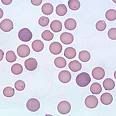
![[dizzy]](graemlins/dizzy.gif)
![[Eek!]](eek.gif)
![[shake]](graemlins/shake.gif)
![[lol]](graemlins/lol.gif)
![[hi]](graemlins/hi.gif)
![[bonk]](graemlins/bonk.gif)
![[group hug]](graemlins/grouphug.gif)